
GraphicMEMOIRBlog | Creator Conversation #84
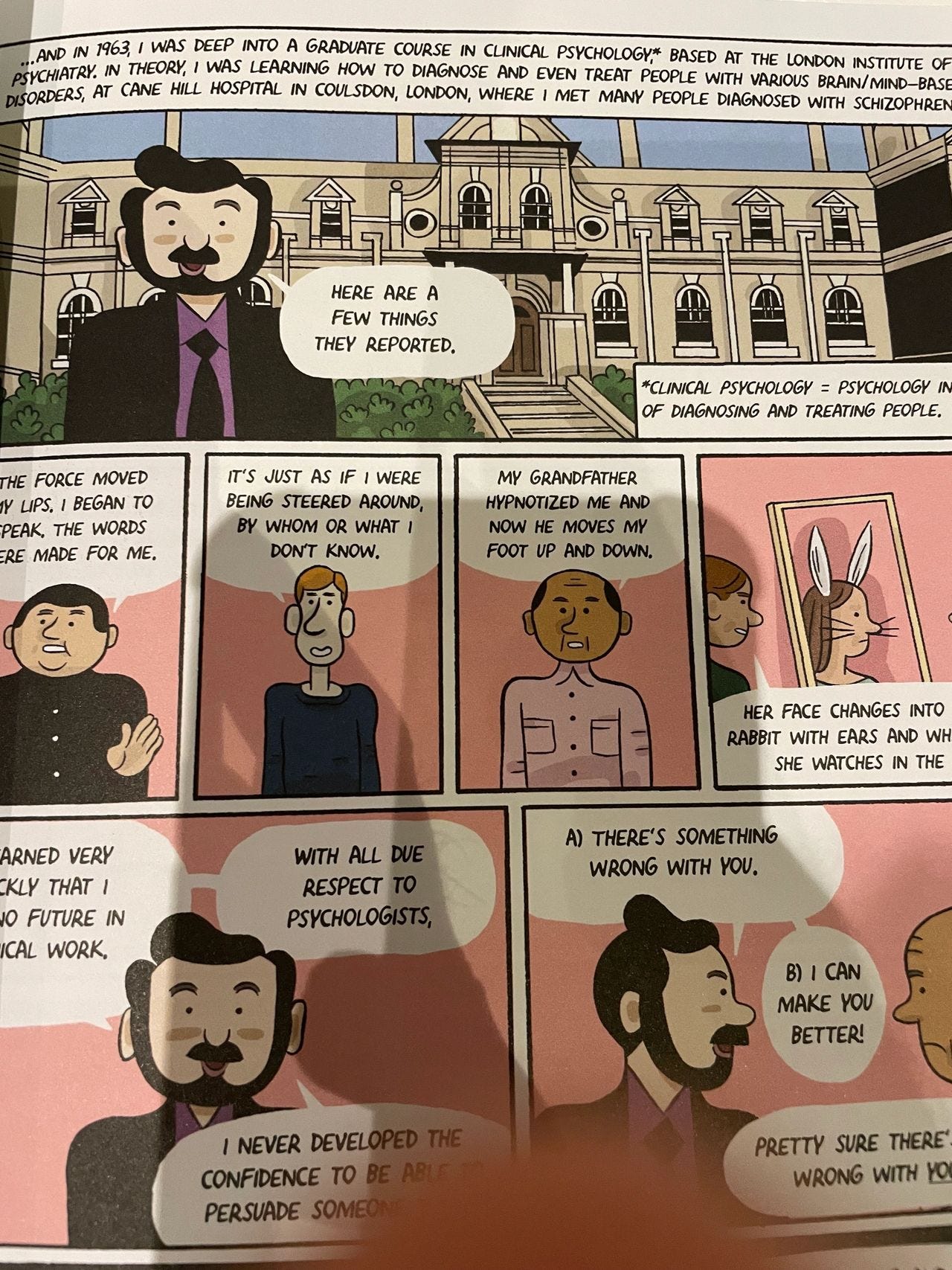
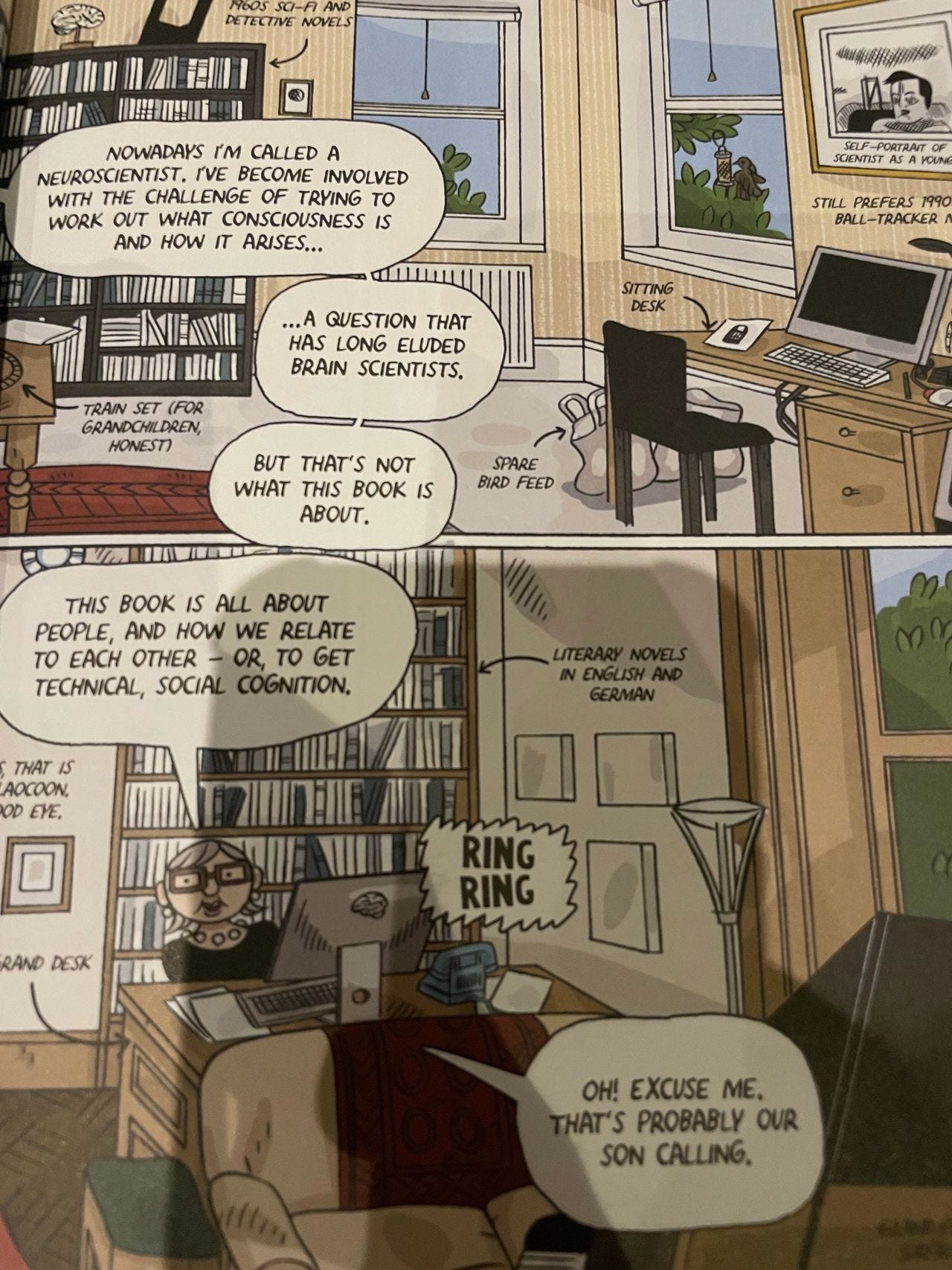
I caught up with Alex Frith, author of Two Heads: Where Two Neuroscientists Explore How Our Brains Work with Other Brains, illustrated by Brighton-based cartoonist Daniel Locke. The 300-page graphic work, created with Alex’s parents, internationally renowned neuroscientists Uta and Chris Frith, transforms decades of pioneering brain research into comics form. Two Heads, published in 2022 by Bloomsbury in the UK and Scribner in the US, has been recognised by The Guardian, translated into multiple languages, and established itself as a distinctive work of “graphic academia.”
My own connection to Alex began in a slightly accidental way. When my graphic novel The English GI was published in 2022, my old school newsletter mentioned another graphic novel by a fellow alumnus. I set out to contact him, but mistakenly emailed the comics journalist Alex Fitch instead. That happy error led to an invitation to speak at Cartoon County and, somewhat neatly, Fitch eventually ended up interviewing Frith as well.
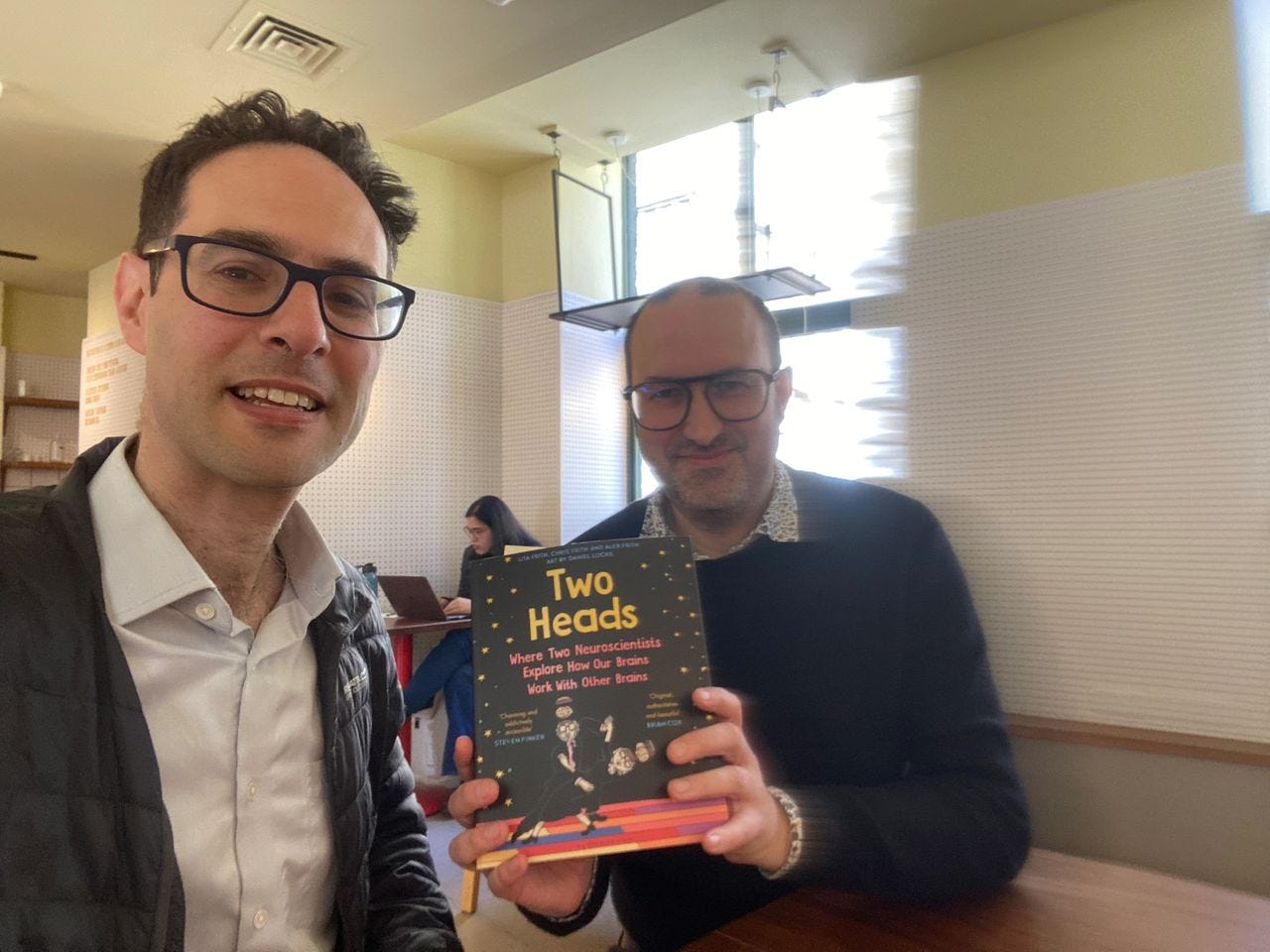
I eventually met Alex in a Clerkenwell coffee shop earlier this month to discuss Two Heads, a graphic non-fiction work that sits somewhere between science writing and family memoir.
The Making of Two Heads
The project began around 2012, when Uta and Chris Frith were jointly awarded a prize from the Jean Nicod Institute in Paris. The award required them to deliver a series of lectures, with funding attached to turn the material into a book. While a traditional academic publication might have been expected, Alex explained:
“They decided very quickly that it’d be more interesting to do it as a graphic novel… I’d been working as a children’s author for about 10 years and I’ve been obsessed with comics since childhood.”
Alex was asked to develop the project.
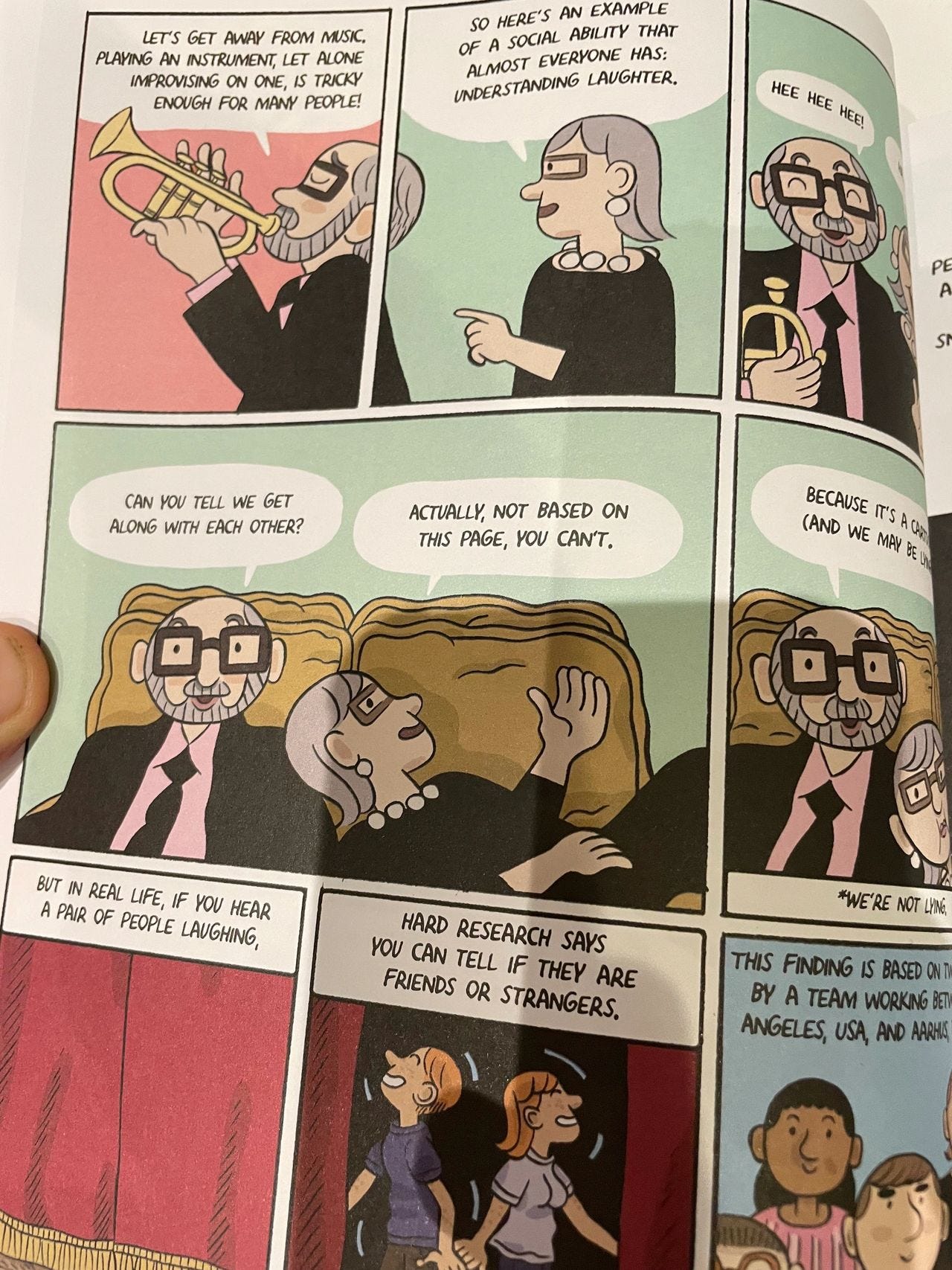
Comics were already part of the Frith household’s shared language. Chris grew up on The Eagle, The Beano, and The Dandy, while Uta brought in a German tradition that included Wilhelm Busch’s Max and Moritz—a rhythmic, mischievous proto-comic that echoes in Two Heads.
The idea also sat comfortably within Alex’s own experience and influences. He recalls trips to Forbidden Planet in London with his father, where they encountered more experimental and adult-oriented comics alongside mainstream British humour, expanding his sense of what the medium could do.
During development, they also came across Logicomix, the graphic biography of Bertrand Russell, which helped reinforce the idea that complex intellectual material could work in visual form—particularly when grounded in personal narrative.
(Note: I previously covered Daniel Locke’s work when he curated the PositiveNegatives exhibition at SOAS in 2025.)
Finding the Right Artist
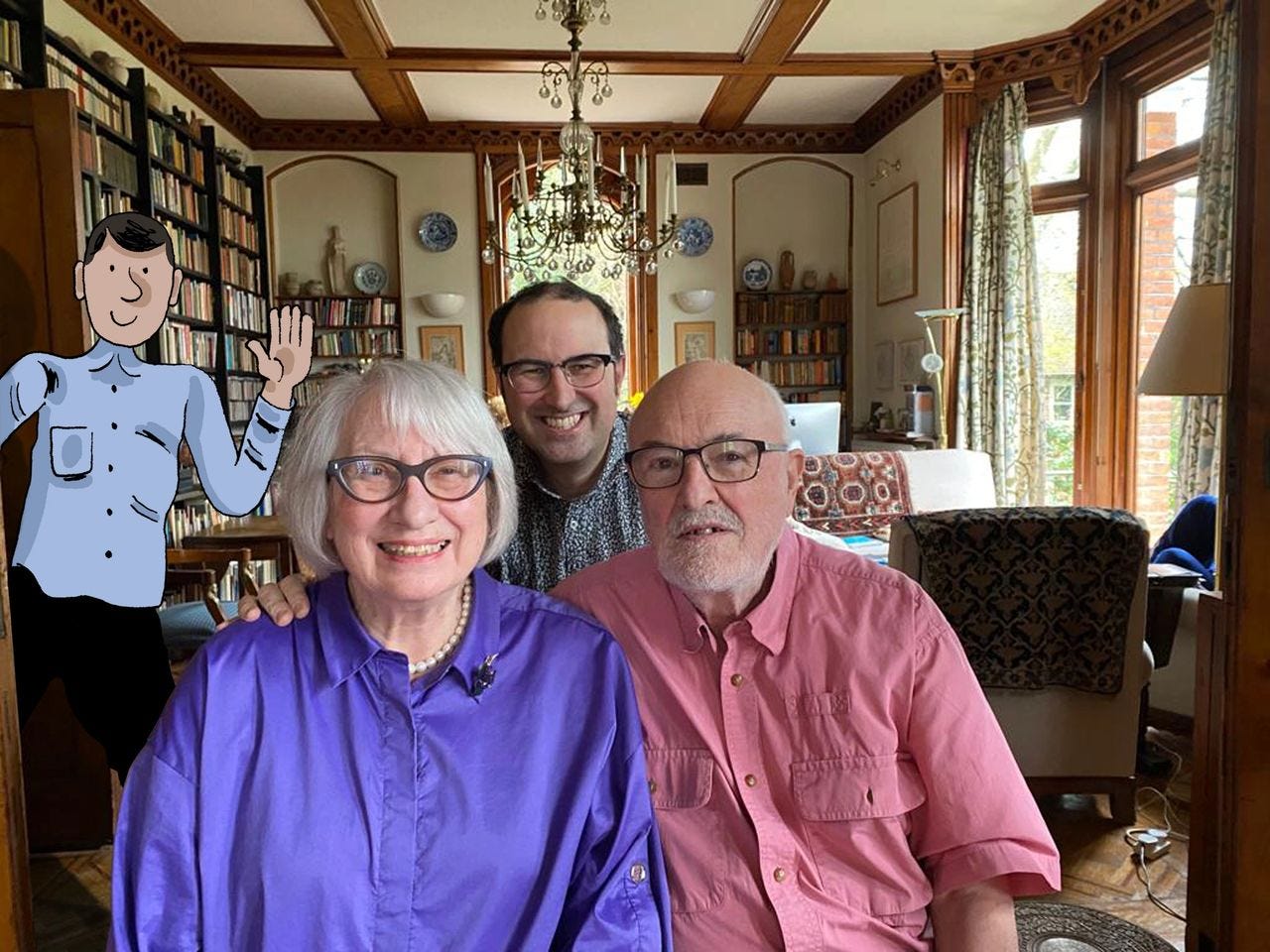
A crucial step was finding the right illustrator, which involved a kind of informal “bake-off” to test how the science might translate visually. The team commissioned samples from two artists—one recommended through an academic contact, and Daniel Locke, who was ultimately recommended by the same artist after other avenues had proved unsuccessful. They chose Daniel because his style felt “a bit cooler,” but also because his background in animation made him unusually well-suited to a large, complex project.
“Daniel has a background as an animator, which is an amazing boon… he’s just very good at doing really quick sketches that are absolutely communicating.”
That speed proved decisive. Locke effectively redrew the book several times, moving from rough layouts to refined pages and final colour artwork as the manuscript evolved. When the publishers encouraged expansion, his ability to iterate quickly allowed the project to grow without losing coherence.
“Comics do need time to breathe.”
The book eventually more than doubled in size, from around 150 pages to over 300, giving space for complex experiments and explanations to unfold more naturally.
Visually, Alex also drew on his experience at Usborne Publishing, where information design often borrowed from television documentary aesthetics. That influence runs through the book’s structured layouts and clarity of presentation:
“Trying to make it look a bit like TV… functioning comic panels that look like a documentary.”
A consistent nine-panel grid—loosely echoing European comics such as Asterix—helped keep the material accessible, particularly for readers new to the medium.
Publishing and Reception
The transition from private project to mainstream publication was helped by literary agent Patrick Walsh, who secured deals with Scribner in the US and Bloomsbury in the UK. Once in the formal publishing system, the project gained structure, deadlines, and editorial input that helped refine its scale and pacing.
The publishers initially felt the material was too dense and encouraged expansion, which ultimately doubled the length of the book. This change was crucial in allowing scientific ideas to unfold more naturally, giving both narrative and explanation room to breathe.
On publication, Two Heads was well received, including recognition from The Guardian, which named it “Graphic Novel of the Month” and later included it in its year-end selections. To strengthen its scientific positioning, endorsements from figures such as Steven Pinker and Brian Cox were included on the cover, signalling its academic credibility as well as its accessibility.
As Alex notes, these endorsements helped bridge a gap between disciplines:
“Between my parents’ contacts and the publisher’s contacts, they sent it to the sort of people you think of as big names.”
Despite these endorsements, the book faces the challenge of categorization. Alex admits that the “non-fiction graphic novel” remains a hard sell, often shelved in the literary graphic novel section rather than under science writing. When discussing the intended audience, Alex reveals they were specifically aiming at psychology undergraduates and A-level students looking for an engaging entry point into the field.
Despite that, it has found a strong afterlife in academic contexts. Translated into multiple languages—including French, Chinese, Turkish, and Korean—it is now used on university psychology reading lists. In doing so, Two Heads has carved out a distinctive space: a form of “graphic academia” that translates complex research into visual narrative.
Article written by Jonathan Sandler, author of the Graphic Novel, THE ENGLISH GI: WORLD WAR II GRAPHIC MEMOIR OF A YORKSHIRE SCHOOLBOY’S ADVENTURES IN THE UNITED STATES AND EUROPE , which was published in April 2022.
Thanks for introducing me to this book... it sounds fascinating.
This is such a cool project!! Love how comics have made it into universities!! Another book to add to my reading list!!