
GraphicMEMOIRBlog | Creator Conversation #86
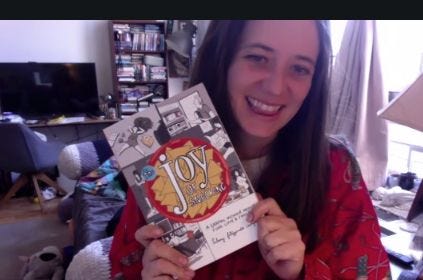
Hilary Fitzgerald Campbell is a Brooklyn-based cartoonist, stand-up comedian, and contributor to The New Yorker whose work blends sharp humour with emotional honesty. Raised in Northern California, Campbell has emerged as a distinctive voice in modern comics through two lively and informative graphic memoirs: Murder Book, an exploration of true crime culture and the people who consume it, and The Joy of Snacking, a deeply personal account of disordered eating, body image, and recovery shaped by early 2000s diet culture. Moving between stand-up sensibility, single-panel cartooning, and long-form memoir, Campbell brings an unusually conversational and comedic energy to graphic nonfiction.
It was a delight to speak with Campbell from her Brooklyn home about how she created these two fascinating graphic memoirs and a whole lot more.
Learning to Draw Through Peanuts
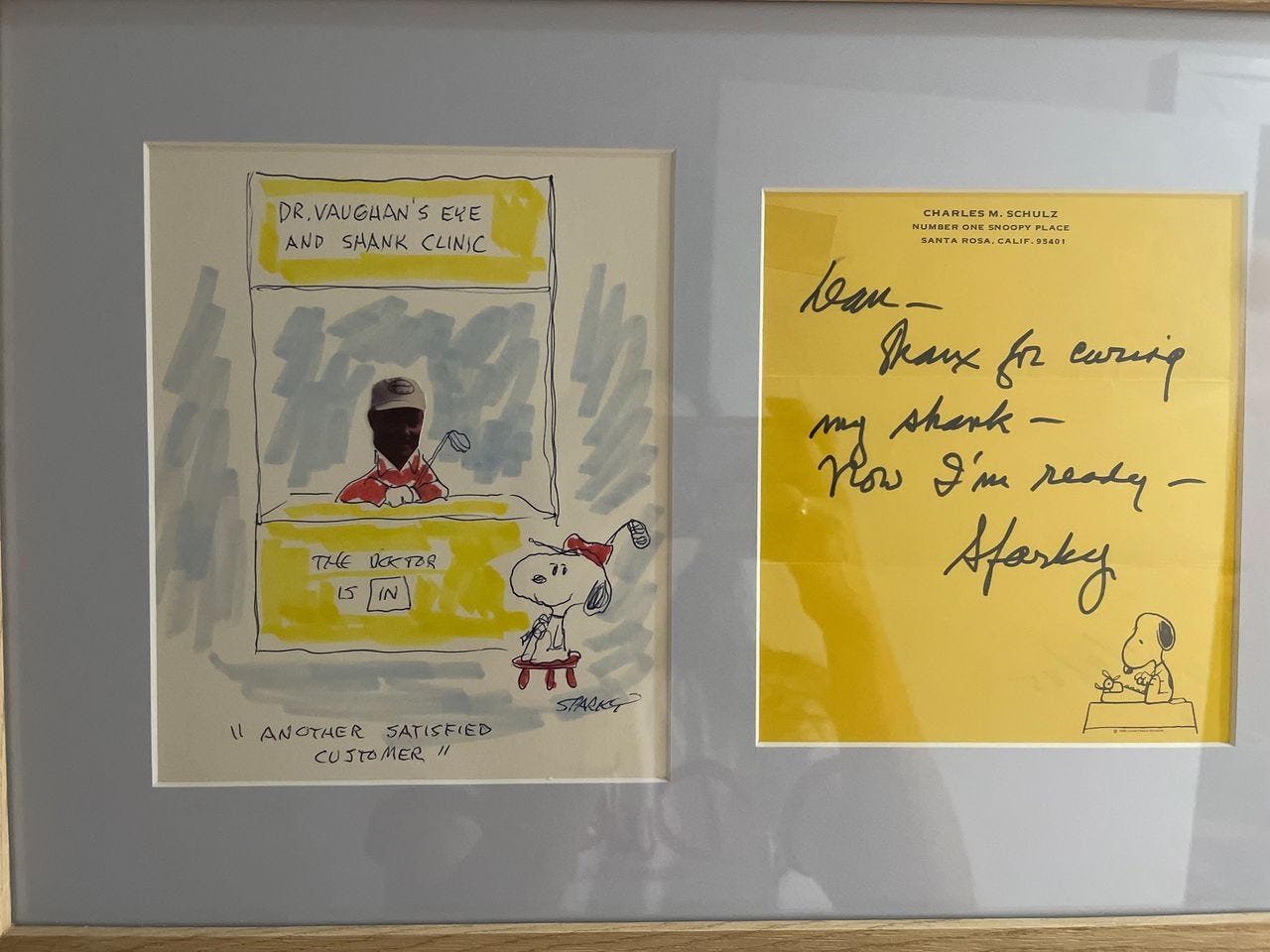
Campbell shared a family connection to the legendary cartoonist Charles M. Schulz. Her grandfather, an ophthalmologist and avid golfer, became close friends with Schulz, known as “Sparky” to those who knew him, through Northern California golf circles in the 1970s and 80s.
As a result, Campbell grew up surrounded by original Peanuts artwork. Where Schulz originals would be museum pieces for most cartoonists, for her they were part of everyday life. She also revealed that her grandfather was indirectly referenced in the Peanuts strip itself, with Schulz occasionally slipping in ophthalmologist jokes as a quiet, affectionate nod to their friendship.
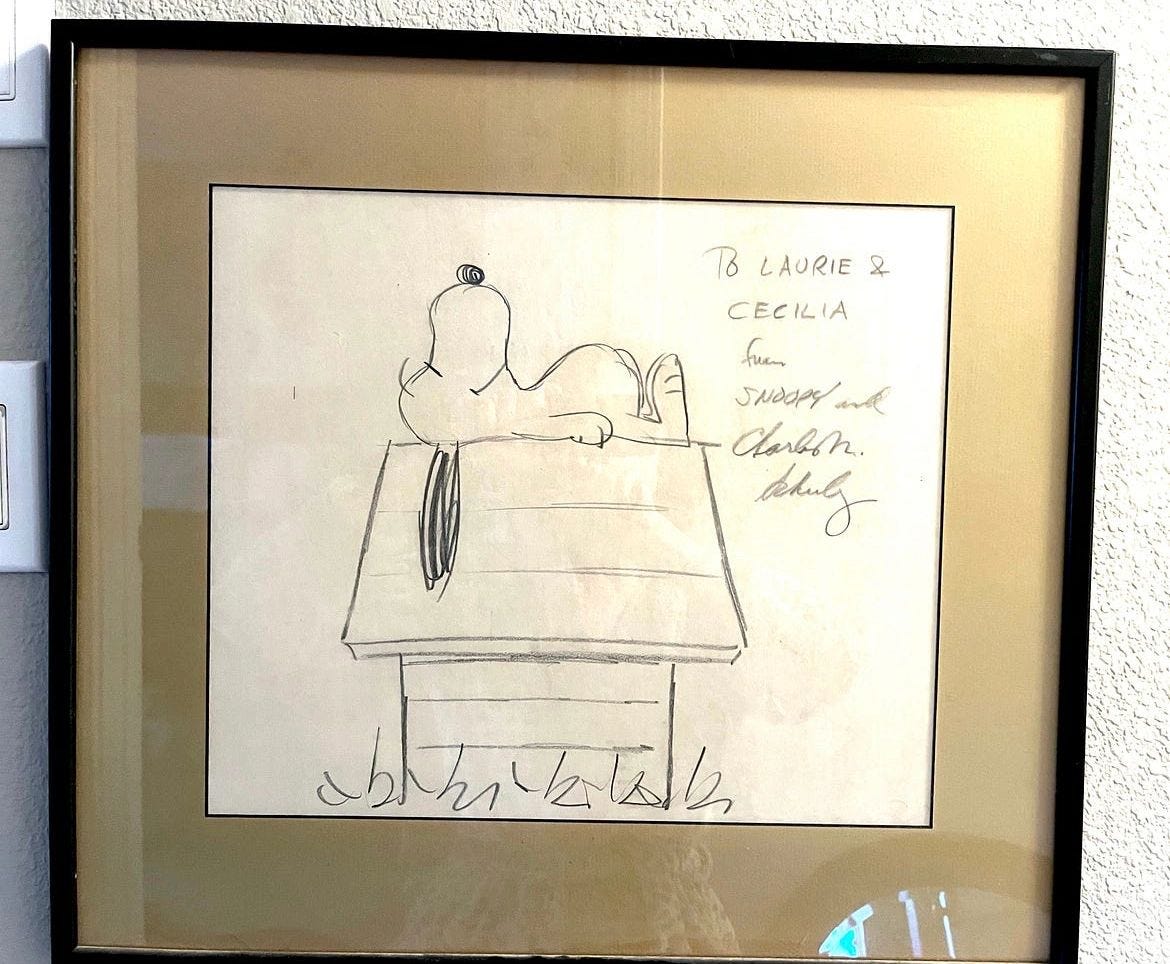
Although Campbell never met Schulz before his death in 2000, she has since met his widow Jean, and still regards that Santa Rosa connection as foundational to her artistic identity.
“That’s how I learned to draw,” she explained. “I would sit and copy Snoopy and Peanuts books.”
Breaking Into The New Yorker
Though Campbell harboured childhood dreams of cartooning, she initially set it aside after college, unsure how to turn it into a viable career. When she eventually returned to drawing and set her sights on The New Yorker, her biggest hurdle was simply figuring out how to get through the door.
After moving to New York around eleven years ago, she took a leap that many young artists will recognise: she cold emailed cartoonist Amy Kurzweil asking for advice. To Campbell’s surprise, Kurzweil responded warmly and walked her through the practical realities of the magazine’s weekly cartoon meetings, even down to which elevator to take.
Armed with this insider guidance, Campbell entered a world she had previously only imagined. She soon found herself standing in the hallway alongside established cartoonists such as George Booth, waiting to submit work in a state of near disbelief. “You’re kind of walking in and you’re just like, can’t believe that,” she recalled.
Campbell submitted cartoons every week for a full year before making her first sale. Over time, the process became a form of endurance training. By the time she finally broke through, she had already begun building a parallel career in publishing, including spot illustration for Feminist Fight Club at HarperCollins.
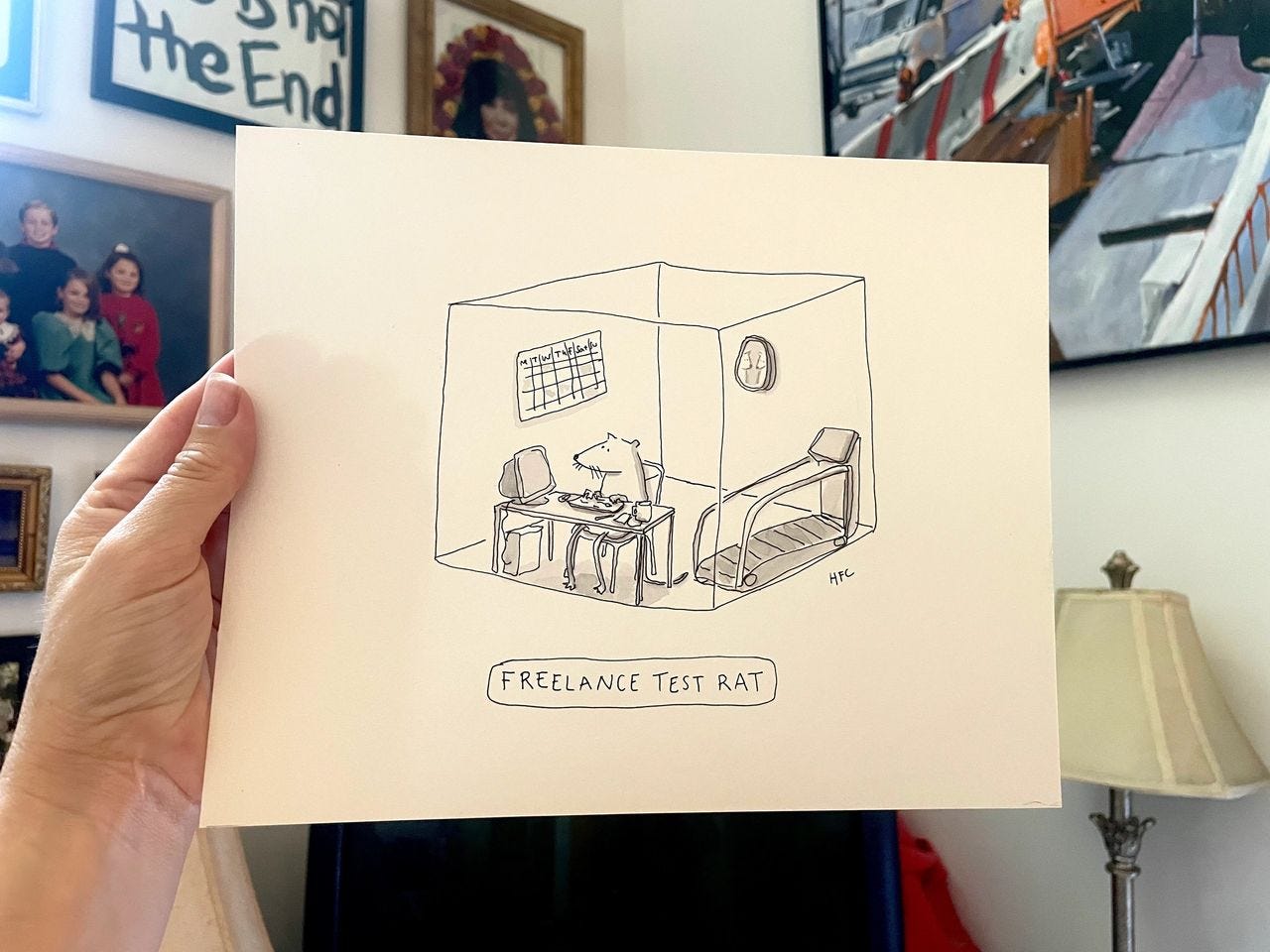
Murder Book and the Culture of True Crime
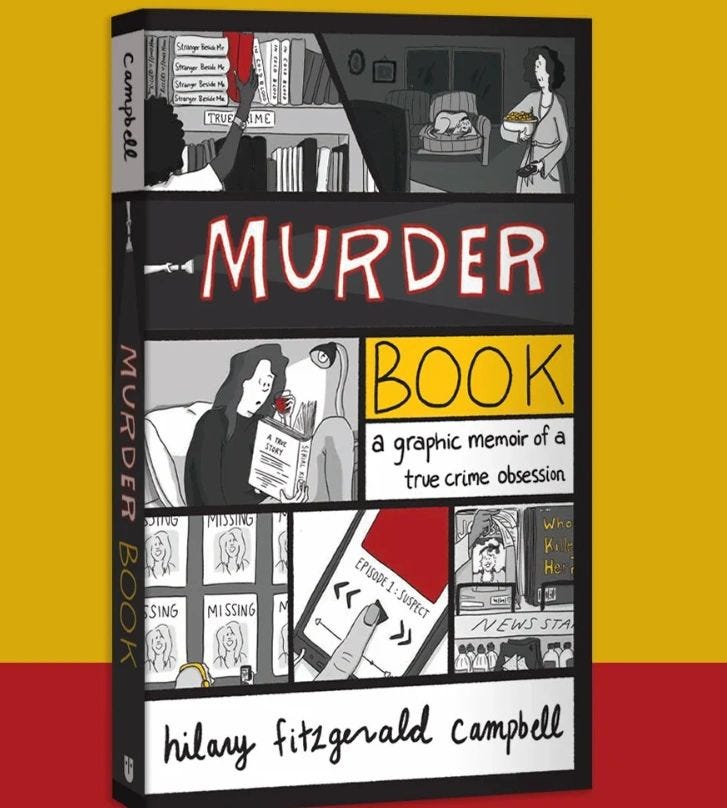
Campbell’s first graphic memoir, Murder Book, emerged from one of the defining obsessions of contemporary culture: true crime. “I wanted to write more about the people consuming it,” Campbell explained during our conversation, particularly women like herself and her mother.
The memoir explores the pair’s shared fascination with murder documentaries, serial killers, and crime stories, while also examining the emotional and ethical dimensions of that fascination.
Importantly, Campbell never treats true crime fandom as a quirky novelty. She pushes back against the idea that society’s obsession with murder is somehow new. Instead, she situates it within a much longer history of public fascination with violence and tragedy.
Campbell approaches the subject with humour and self-awareness, but she also understands the anxieties that often underpin true crime consumption: fear, vulnerability, and the desire to impose narrative order on chaos.
The memoir also found an unexpectedly broad readership. Campbell noted that the book resonated strongly with self-described “murderinos” — fans of podcasts such as My Favorite Murder — but it also crossed into academic settings, appearing on university courses dealing with memoir, criminology, and social justice.
The Joy of Snacking
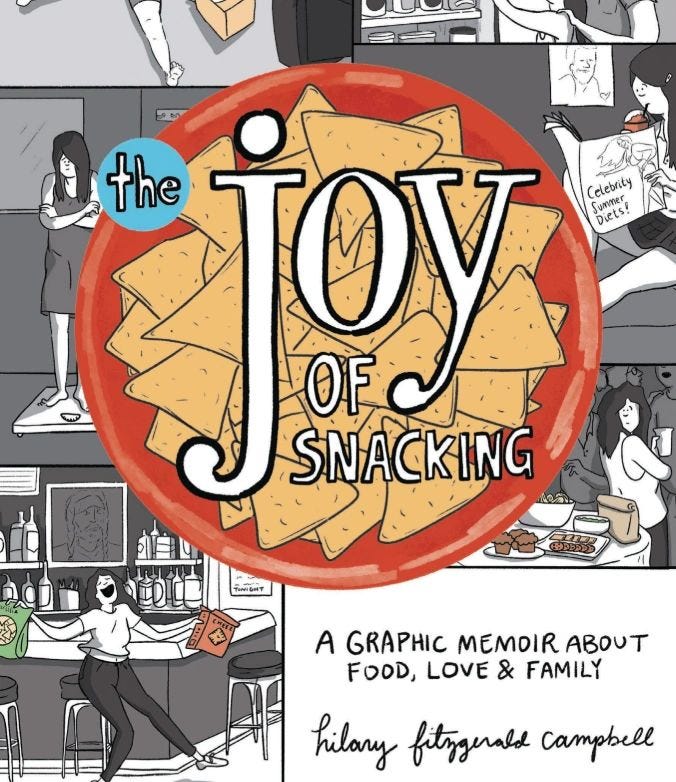
If Murder Book explored collective obsession, The Joy of Snacking turns inward, focusing on disordered eating, body image, and the lingering impact of diet culture from the late 1990s and early 2000s.
Rather than the most extreme manifestations of eating disorders, she is drawn to quieter, more invisible forms — struggles that often go unrecognised precisely because they appear socially acceptable.
“I wanted to write about an eating disorder that no one notices,” she explained.
For readers shaped by that era’s fad diets, celebrity weight loss narratives, and casual body shaming, the subject feels especially resonant.
Campbell set out to write not a story of collapse, but a recovery memoir rooted in everyday experience. In doing so, she found it far more difficult to write than Murder Book.
“It’s funny how I drew a book about murder, and it wasn’t that hard to get through,” she reflected. “This book was way harder.”
She drew on diaries and conversations with family to ground the memoir in lived detail, creating a work that feels both intimate and carefully observed.
Visually, the book marks a shift into colour. “Food needs to be in colour,” she said. “You can’t draw a book about food and have it be black and white.” The added labour of colouring contributed to its five-year production, but for Campbell it was essential to how the story needed to work.
The book has resonated deeply on a personal level. Campbell described being moved by the response, particularly from readers who relate to its portrayal of “invisible” eating disorders and lingering body anxieties.
She is often approached by people who tell her, “I thought I was the only person who did that,” or that they had “never seen my exact struggle written down before.” For Campbell, these moments have become among the most meaningful aspects of releasing the memoir, confirming the quiet recognition at the heart of the book.
Drawing Loosely
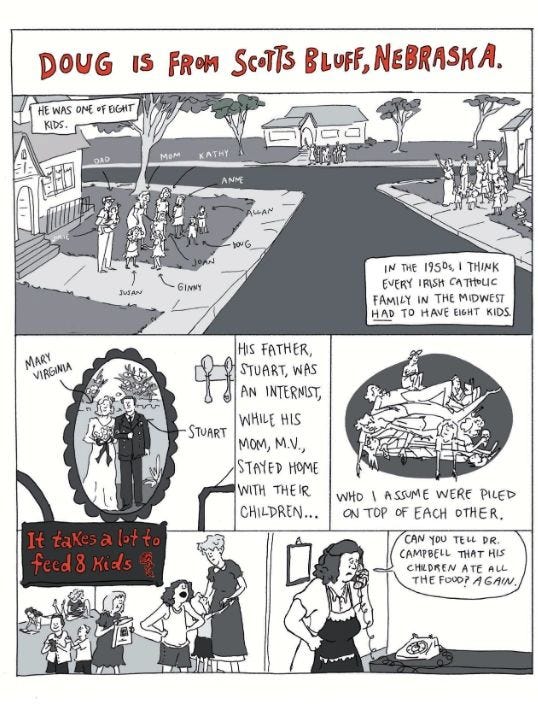
Unlike cartoonists who carefully script every detail in advance, Campbell described her method as highly fragmented and intuitive. For months, she gathers observations, jokes, memories, and fragments of dialogue on scraps of paper before sorting them into thematic clusters.
“I’m like a squirrel,” she joked.
That looseness extends to the artwork itself. Campbell remains deeply influenced by George Booth, particularly the freedom and spontaneity of his line work. She actively avoids over-polishing her drawings, believing that excessive refinement can flatten emotional immediacy.
“I much prefer a looser thing,” she explained.
Her background in film theory and screenwriting also shapes how she thinks about comics pages. Rather than treating panels as static units, she approaches them cinematically, constantly considering pacing, eyelines, visual rhythm, and “camera angles.”
“I get bored if it’s just panel, panel,” she said.
That cinematic sensibility gives Campbell’s memoirs their conversational energy. The pages feel alive, shifting fluidly between observational humour, memory, and emotional confession.
She also discussed the sheer physical reality of creating long-form comics. Unlike prose writing, graphic memoir operates at the speed of drawing. A page simply takes as long as it takes.
“Drawing, you can only draw at a certain speed,” she reflected.
Both Murder Book and The Joy of Snacking took roughly five years to complete — a reminder of the extraordinary labour behind graphic memoirs.
And Finally, an Exhibition
I am always fascinated by how rarely cartoonists exhibit their work publicly. Hilary Fitzgerald Campbell will open an exhibition of her drawings at Greenpoint Open Studios in Brooklyn from May 28 to June 17. Describing the show, Campbell laughed: “It’s crowded, it’s just going to be crowded with drawings. I have so many drawings. I’m just going to fill a room with drawings.”
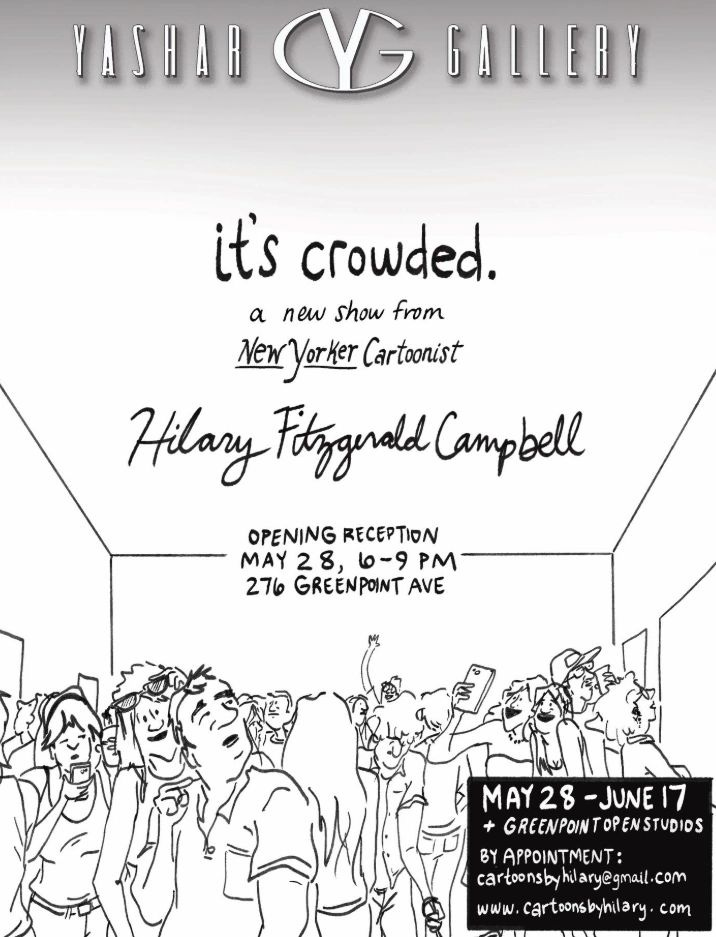
The exhibition feels like a fitting extension of the philosophy that runs through all of Campbell’s work. Whether submitting cartoons weekly to The New Yorker or spending years completing a graphic memoir page by page, cartooning ultimately depends on persistence — continuing to draw even when progress feels slow. That persistence, combined with humour, vulnerability, and a strong comic sensibility, is what makes Hilary Fitzgerald Campbell such a compelling voice in contemporary graphic memoir.
Article written by Jonathan Sandler, author of the Graphic Novel, THE ENGLISH GI: WORLD WAR II GRAPHIC MEMOIR OF A YORKSHIRE SCHOOLBOY’S ADVENTURES IN THE UNITED STATES AND EUROPE , which was published in April 2022.
Great post!! Fascinating topics for graphic memoirs.
Hilary is also a great teacher ! I took her comics class and learned so much -Bravo on a great article!