

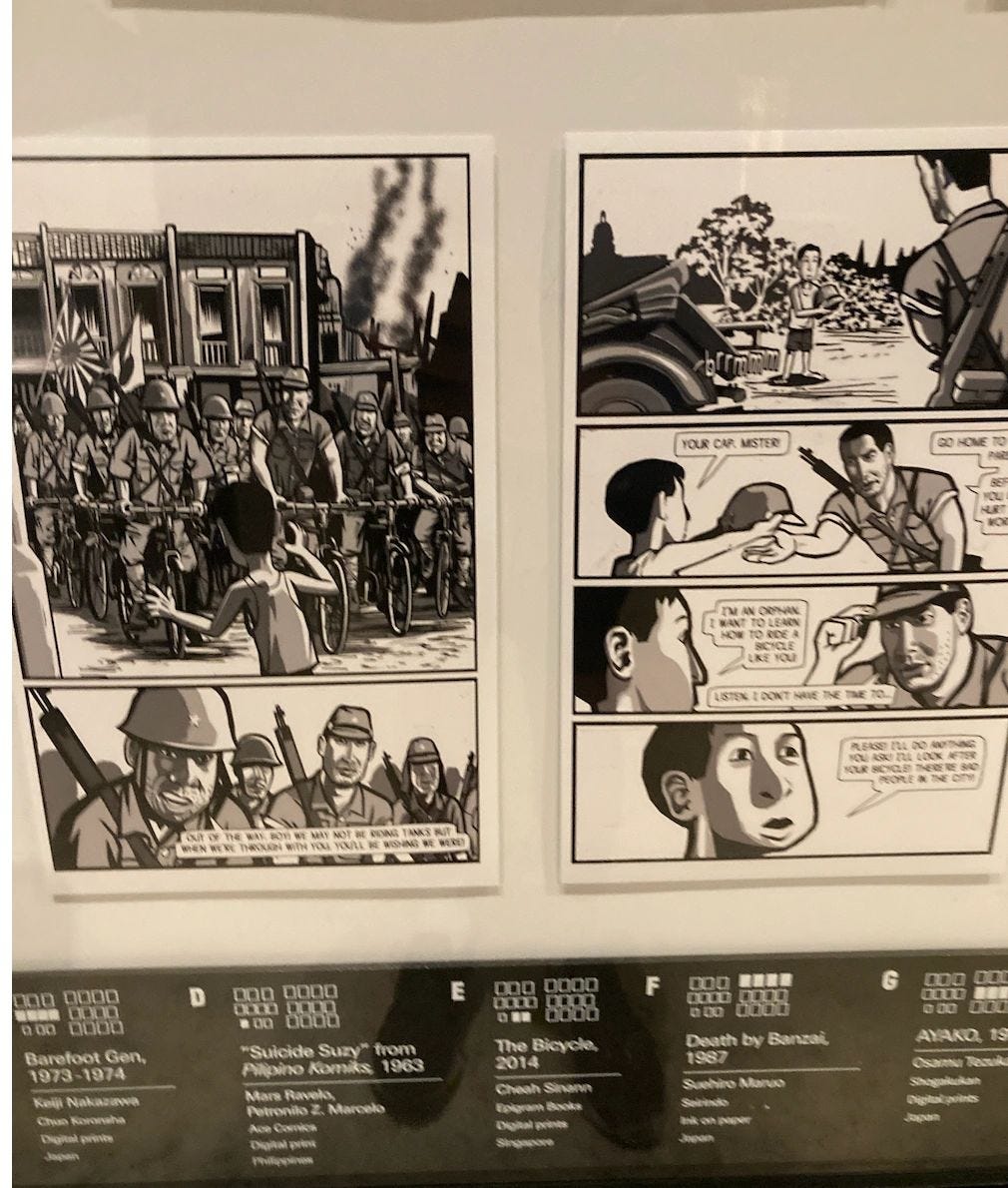
Last year, I attended Asian Comics: Evolution of an Art Form at the Bowers Museum in Orange County, California. Curated by Paul Gravett, the exhibition explored the diversity of comics across Asia. Among the many works on display, one in particular left a lasting impression: The Bicycle, a World War II story by Singaporean artist Cheah Sinann. I made a mental note to track down a copy in translation someday.
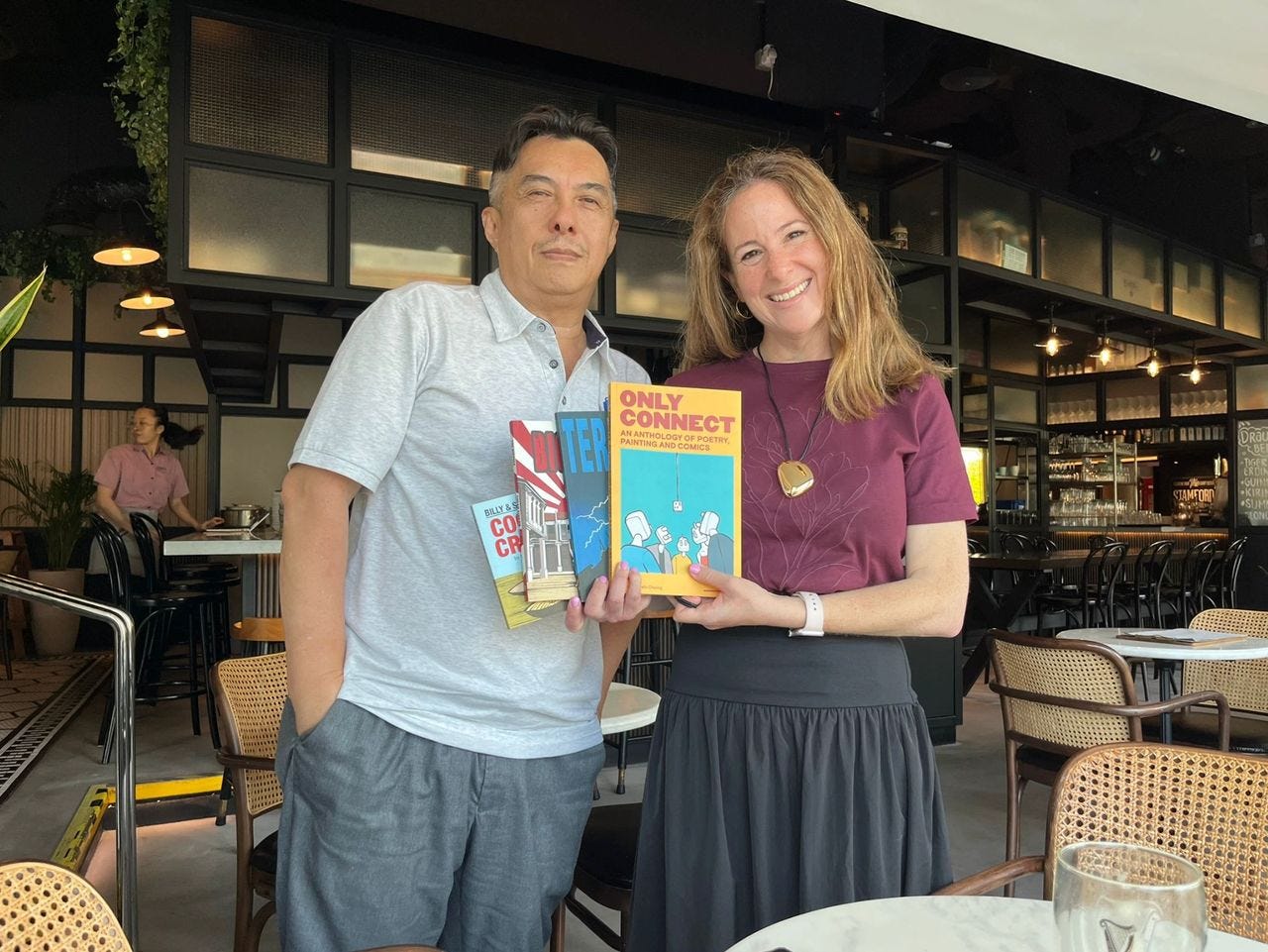
Last month, my wife visited Singapore and happened to be staying just a few minutes’ walk from the National Gallery Singapore, where a book launch was taking place for Only Connect: An Anthology of Poetry, Painting, and Comics — which included another WWII story by Sinann.
On discovering this, I put them in touch, and she enjoyed meeting Sinann and his wife, returning home with signed copies of both books.
The Bicycle
The Bicycle (around 100 pages, black and white) opens with a striking image: an old bicycle unearthed during an archaeological dig in one of Singapore’s last remaining jungles. The discovery awakens long-buried memories for an elderly man, Lim Ah Cheng, transporting him back to the harrowing years of the Japanese occupation.
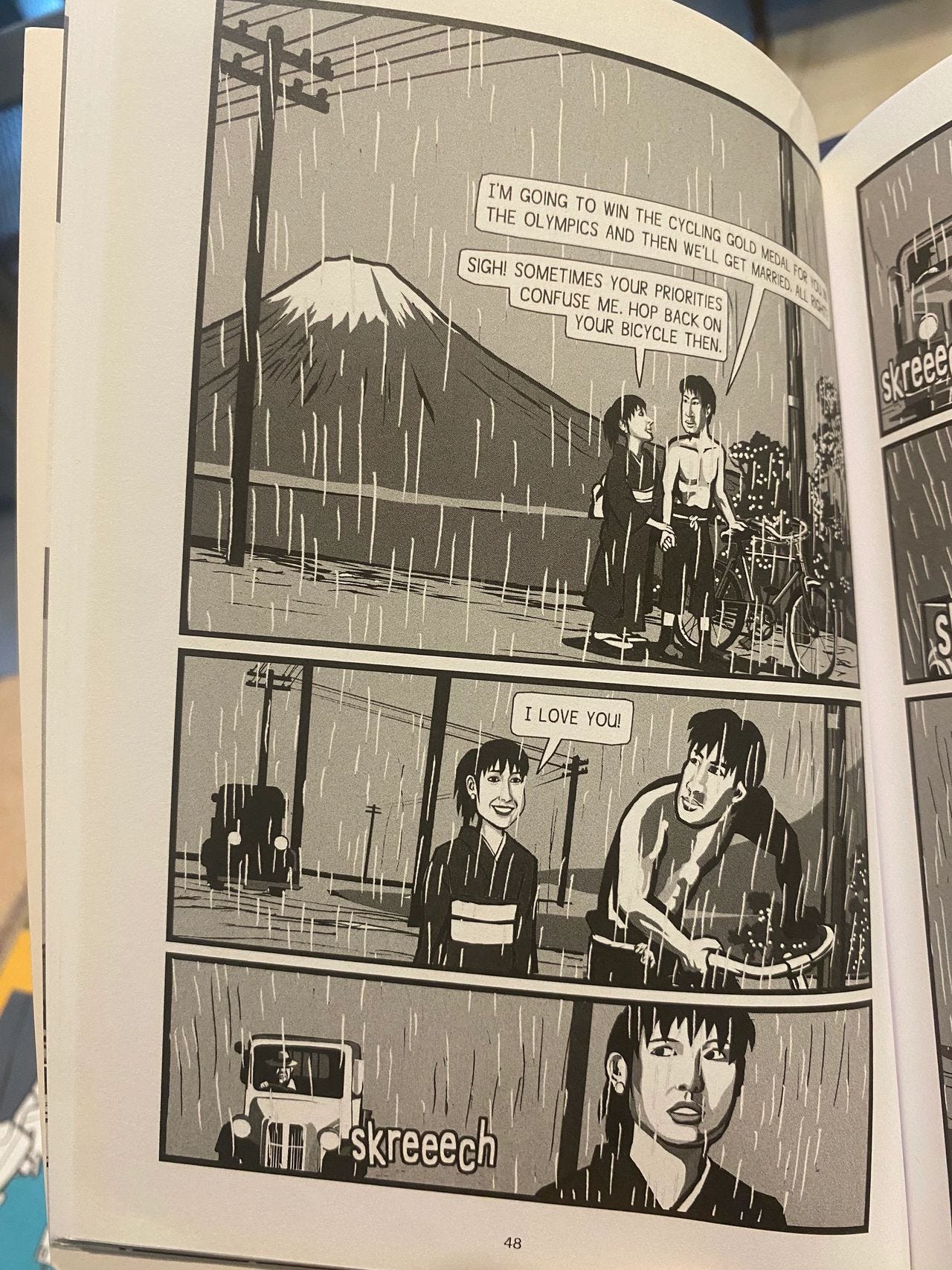
Sinann — creator of Singapore’s first daily comic strip, The House of Lim — brings meticulous research and emotional depth to this story. The narrative interweaves the lives of Lim Ah Cheng, a young boy yearning to ride a bicycle, and Toshiro Akakura, a Japanese soldier who once dreamed of competing as an Olympic cyclist.
As their fates intertwine, Sinann paints a morally complex portrait of the Japanese soldier, Akakura, and We are left to wonder whether he is a hero, villain, or something in between.
Beyond its central story, The Bicycle delves into lesser-known aspects of Singapore’s wartime history. Sinann confronts the troubling history of Japanese prostitution in Southeast Asia, particularly the karayuki-san — Japanese women trafficked to work in brothels throughout the region. At one point, Singapore had become a major hub for this trade, with over 2,000 women working in the Bugis district and sending vast sums back to Japan.
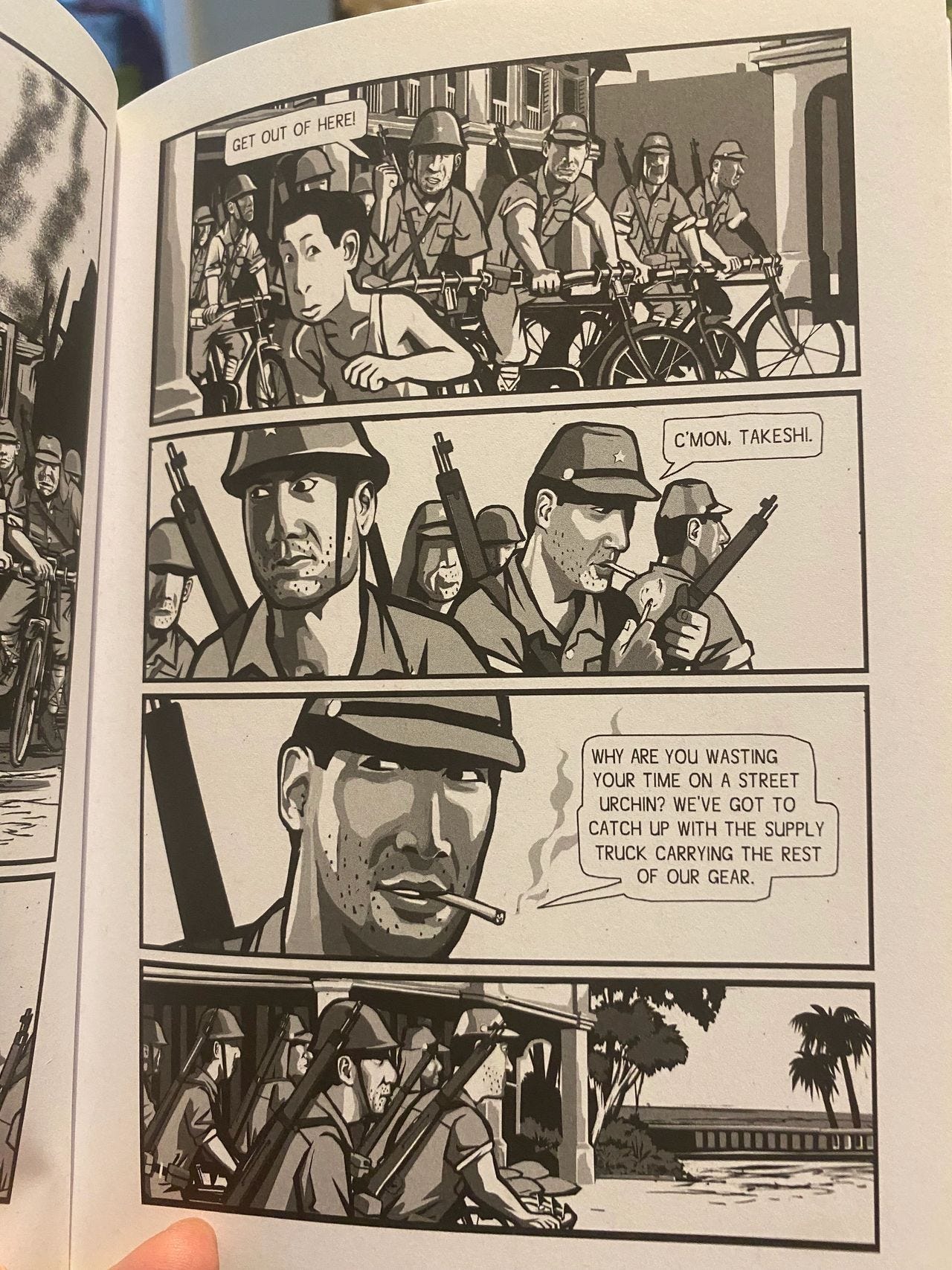
The Bicycle is an excellent story and a great introduction for readers unfamiliar with the Japanese occupation of Singapore. My wife and son read it before their WWII sightseeing trip the next day, and it gave context to what they would later see. The Japanese invasion — famously advancing on bicycles through Malaya is a symbol of WWII History in this region.
Sinann’s black-and-white His clean linework, cinematic pacing, and understated emotion give the story power. Despite its brevity, it lingers long after the final page.
It remains one of the most memorable discoveries from Bowers exhibition — a reminder of how comics can tell history with subtelty.
In its closing pages, The Bicycle references the so-called “Japanese Schindlers” — diplomats such as Mamoru Shinozaki, who performed acts of humanitarian courage during the occupation, and Chiune Sugihara, the Japanese consul in Lithuania who helped over 6,000 Jewish refugees escape the Holocaust. Sugihara’s later recognition by Yad Vashem as one of the Righteous Among the Nations resonates deeply with Sinann’s themes of moral courage and redemption.
Only Connect: An Anthology of Poetry, Painting, and Comics
Only Connect, edited by Felix Cheong, is an ambitious anthology that bridges the worlds of poetry, painting, and comics. Each contributor was invited to create a short graphic story inspired by one of Cheong’s poems and a painting from the National Gallery Singapore. The result is a rich collection exploring themes from war and loss to technology and identity.
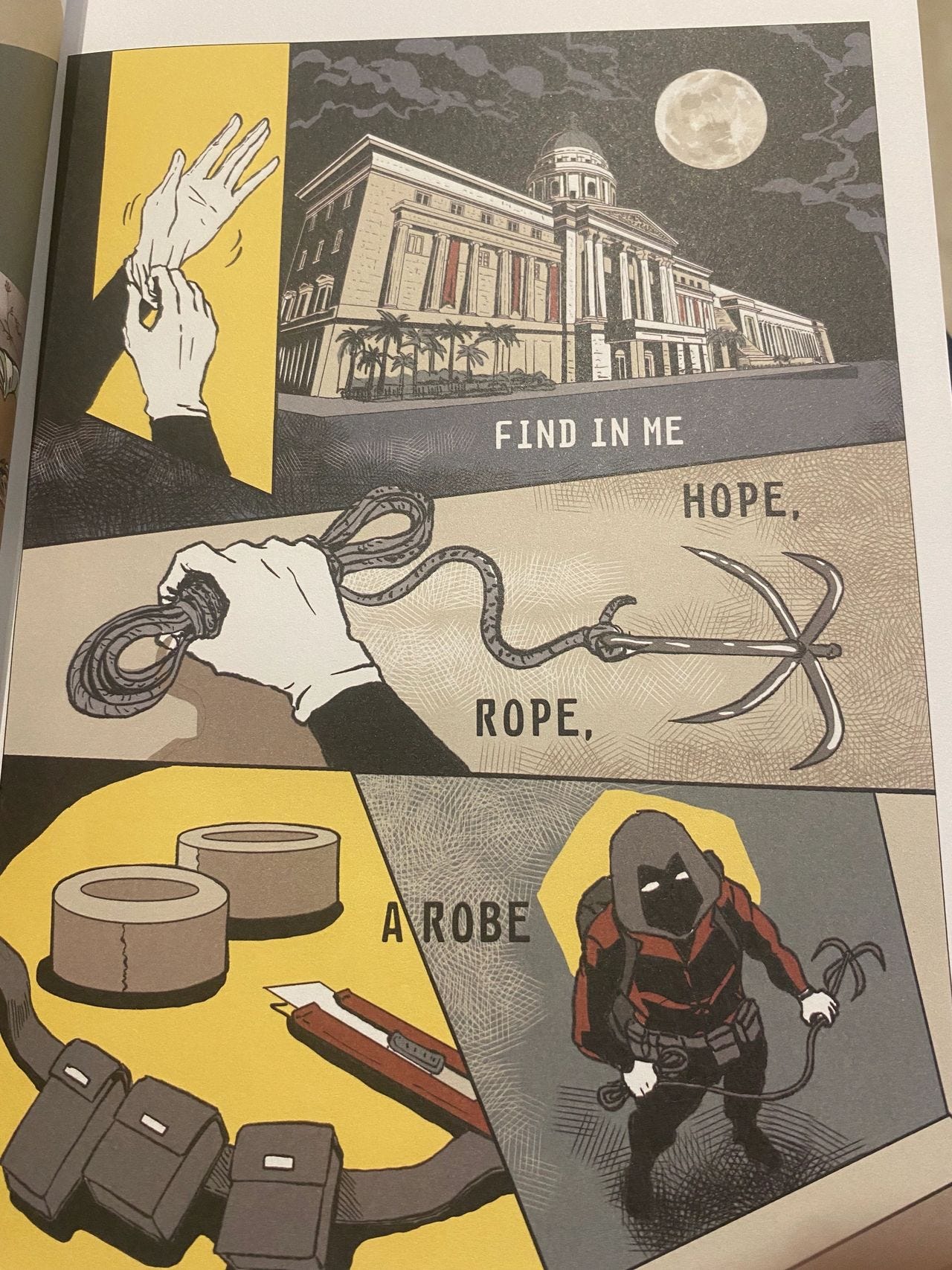
Among the nine contributors are Danny Jalil — whom I’ve previously interviewed on this blog — and Cheah Sinann himself. What makes Only Connect especially engaging is its cross-disciplinary ambition: it invites readers to experience narrative through a triangulation of word, image, and emotion.
The anthology opens with a thought-provoking preface by Gwee Li Sui, who warns of the “harm” comics can do by “rewiring our perception” — forcing us to straddle the worlds of image and word. It’s a fitting introduction to a book that challenges how we read and see.
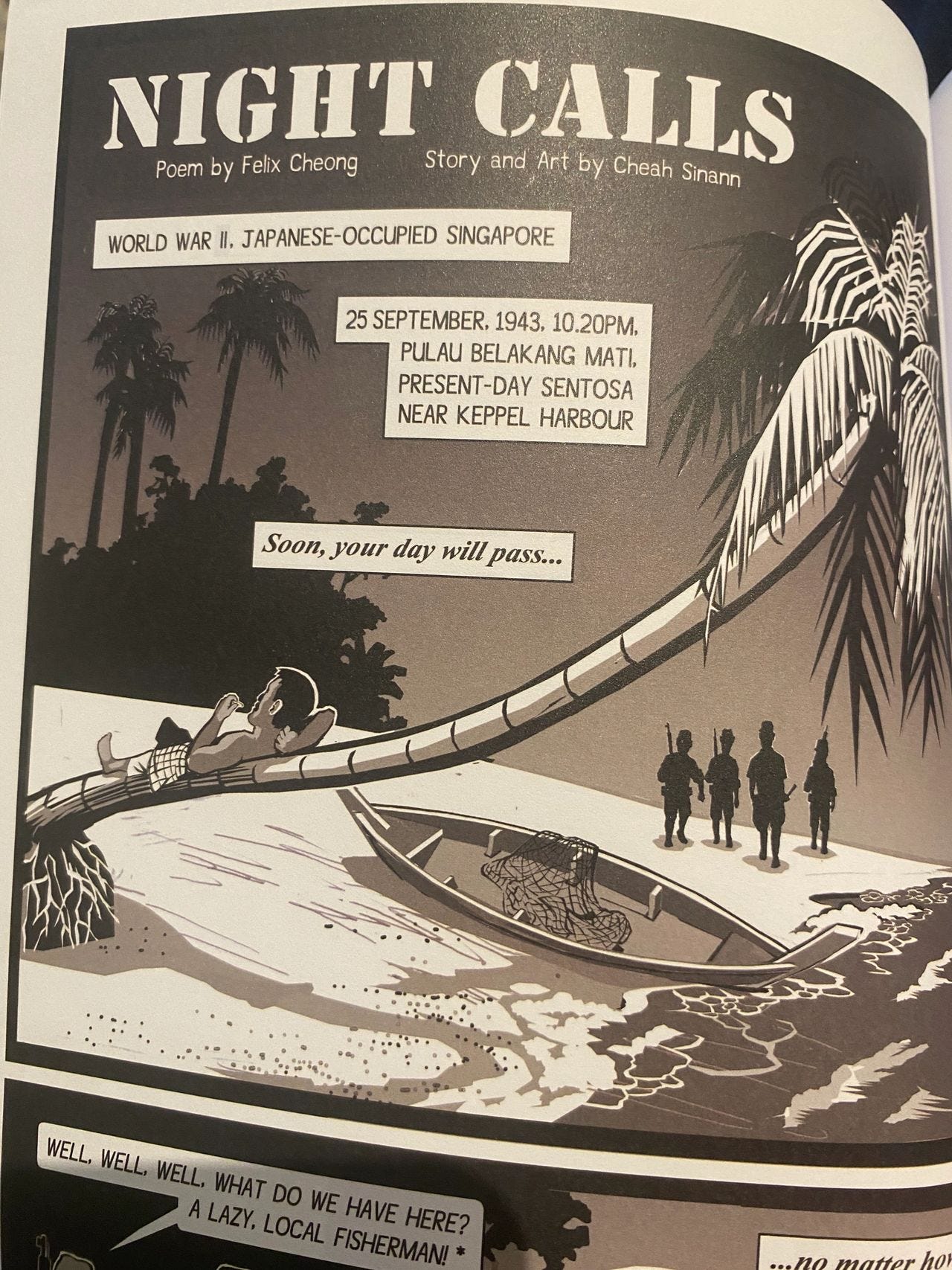
The standout piece for me was Sinann’s Night Calls, a World War II story recounting Operation Jaywick — a daring Allied mission in 1943 in which commandos paddled into Japanese-occupied Singapore Harbour to plant limpet mines. Illustrated in Sinann’s distinctive, expressive linework — familiar from The Bicycle — the story captures both the intensity of covert warfare and the eerie calm of Sentosa Island, where it is set.
The anthology showcases an impressive range of voices and visual styles:
Loo Fang Kai offers a meditation on aging through the ritual of repainting a weathered house.
Don Low reflects movingly on mortality in Obituary.
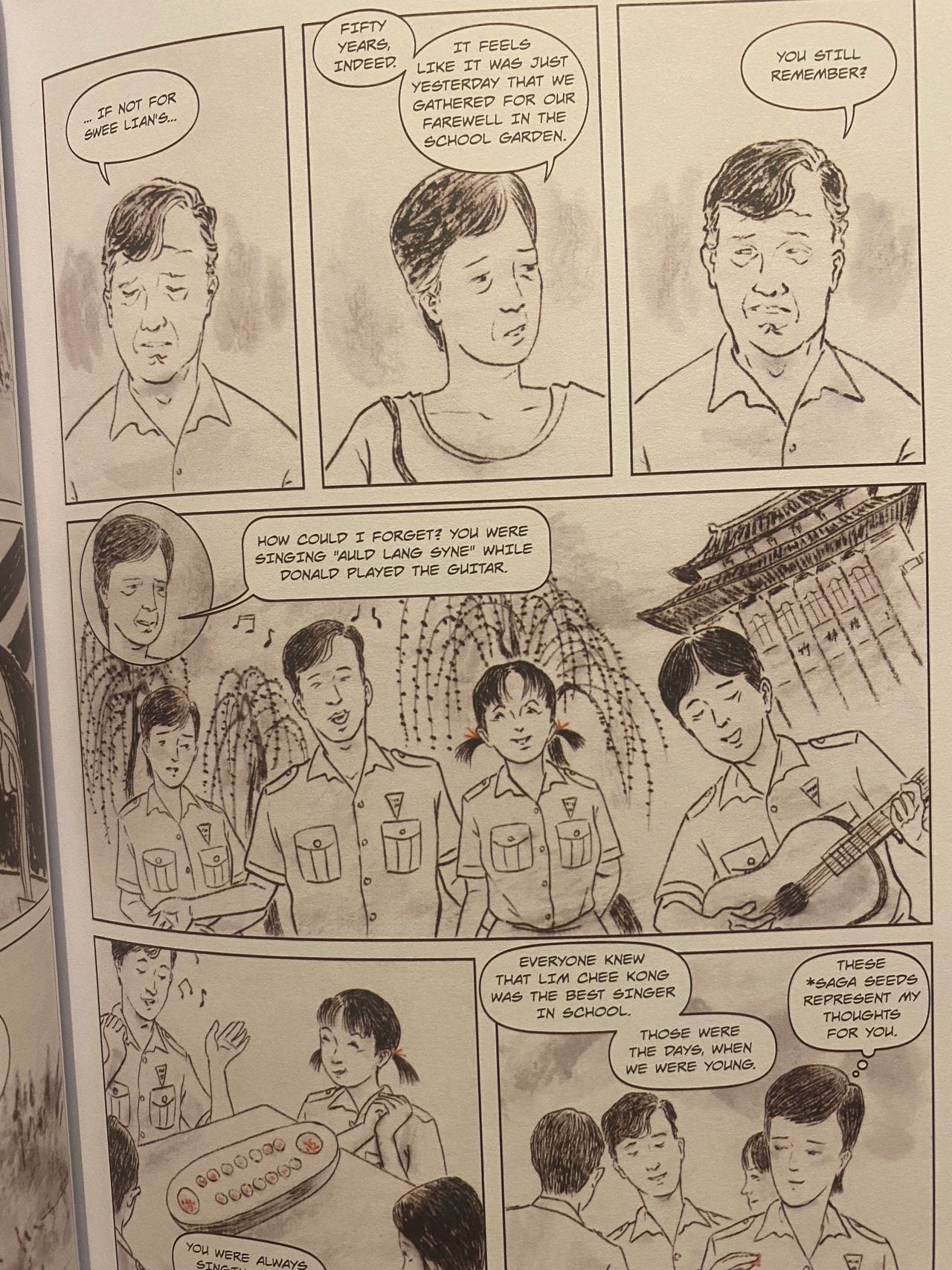
Koh Hong Teng explores nostalgia and regret in Auld Lang Syne, as two old friends reunite after half a century.
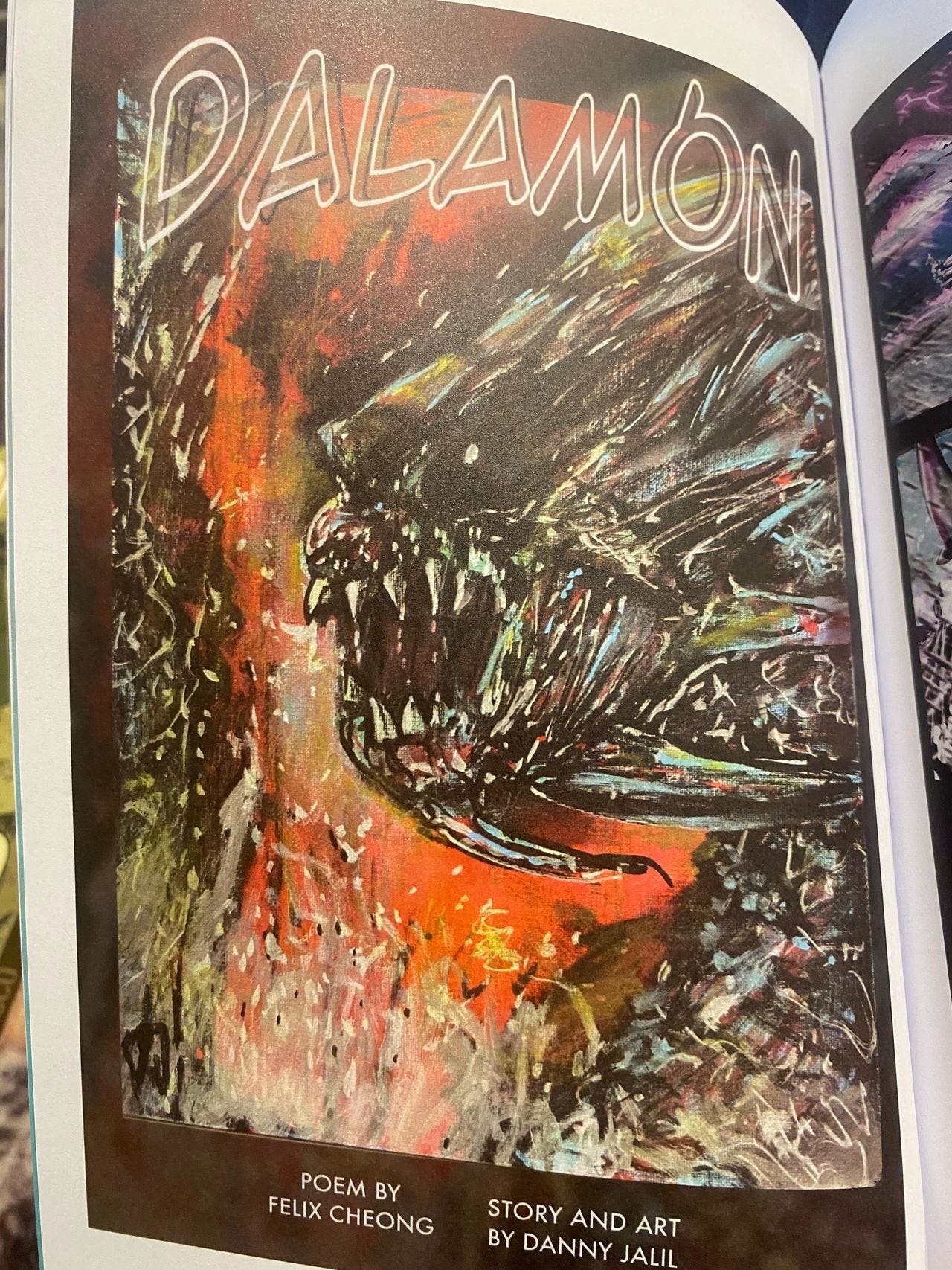
Danny Jalil’s Father and Son uses bold, unconventional coloring to heighten its emotional charge.
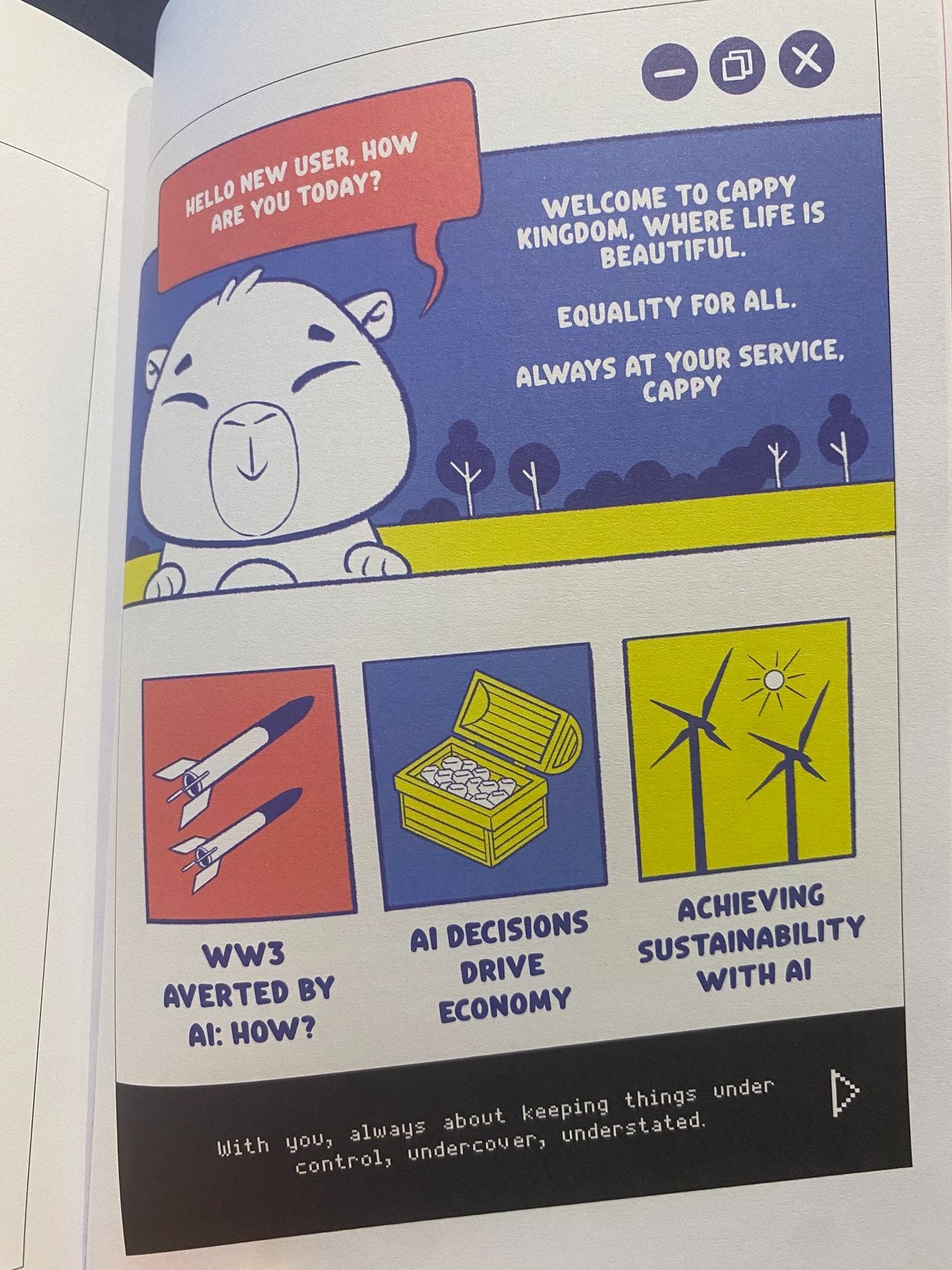
Vanessa Leong’s Control Freak delivers a sharp satire of an AI-driven society obsessed with perfection.
Clio Hui’s Before Reality Shows offers a stylish critique of social media’s performative culture.
James Tan’s Last Words features delicate blue–sepia drawings of animals,
Only Connect succeeds both as an art book and as a meditation on creative translation — on how words, images, and emotions converse across forms. It’s a testament to Singapore’s growing comics scene and a reminder of the connective power of art across disciplines and generations.
Only Connect succeeds both as an art book and as a meditation on creative translation — on how words, images, and emotions converse across forms. It’s a testament to Singapore’s growing comics scene and a reminder of the connective power of art across disciplines and generations.
From The Bicycle to Only Connect, Cheah Sinann continues to shape Singapore’s comics landscape with intelligence, sensitivity, and historical awareness. His work shows that comics can uncover forgotten histories and highlight the humanity found even in dark times.
Article by Jonathan Sandler, Author of THE ENGLISH GI: WORLD WAR II GRAPHIC MEMOIR OF A YORKSHIRE SCHOOLBOY’S ADVENTURES IN THE UNITED STATES AND EUROPE published in April 2022.