
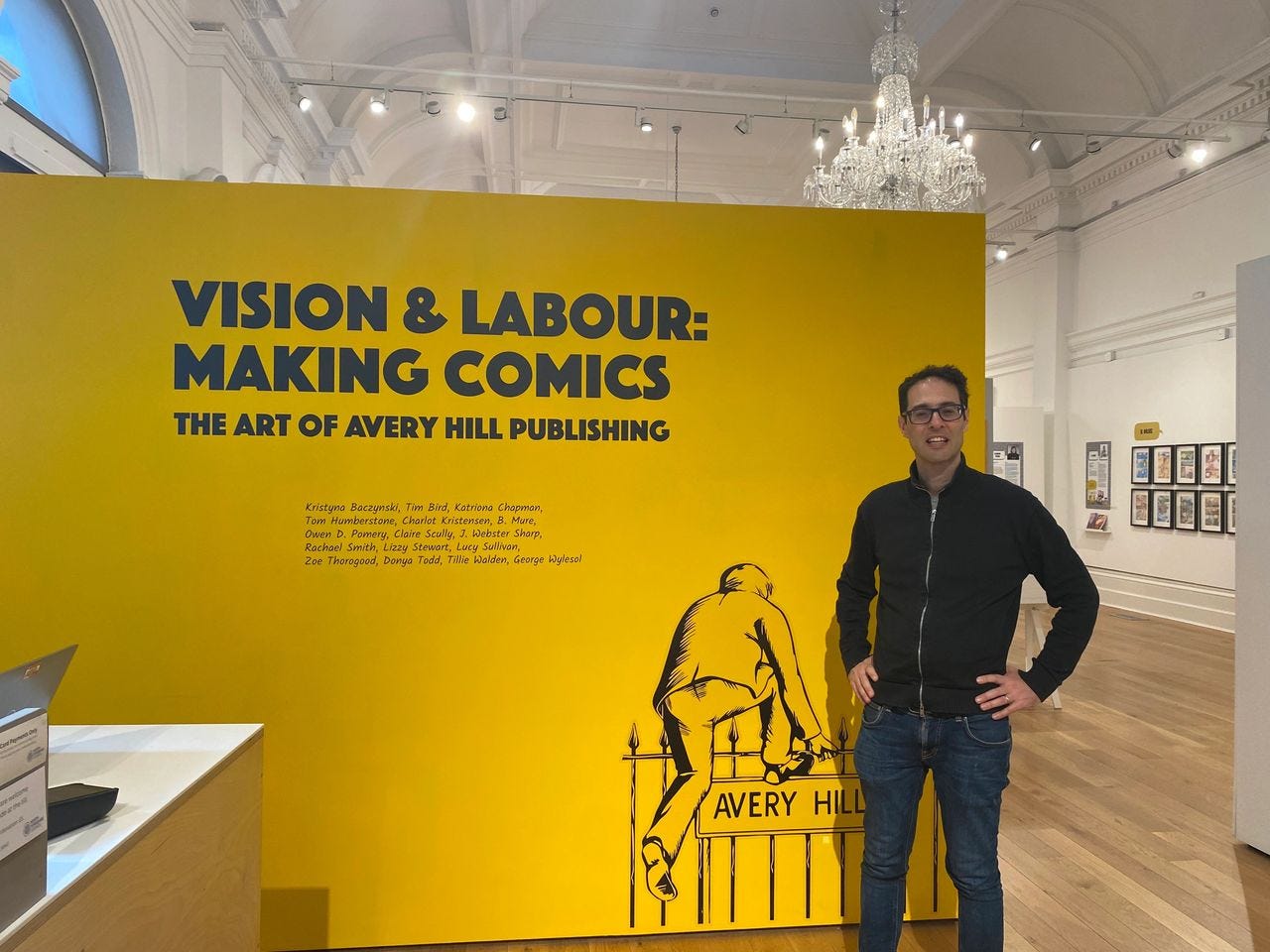
In October, one of the UK’s leading independent comics publishers, Avery Hill Publishing, whose books by Katriona Chapman, Owen D. Pomery and Tim Bird I’ve covered on this blog, announced an exhibition, Vision & Labour: Making Comics - The Art Of Avery Hill Publishing, showcasing some of their leading creators. I knew immediately I had to go, but it wasn’t until the clocks had sprung forward that I finally made the two-hour journey from London via York to Harrogate. I took my son at the tail end of the Easter holidays, combining the visit with a short city break in York.
I wasn’t disappointed. As someone who visits comics exhibitions whenever I can, both in the UK and abroad, this carefully curated show felt distinctive, something with a character of its own.
The Story of Avery Hill
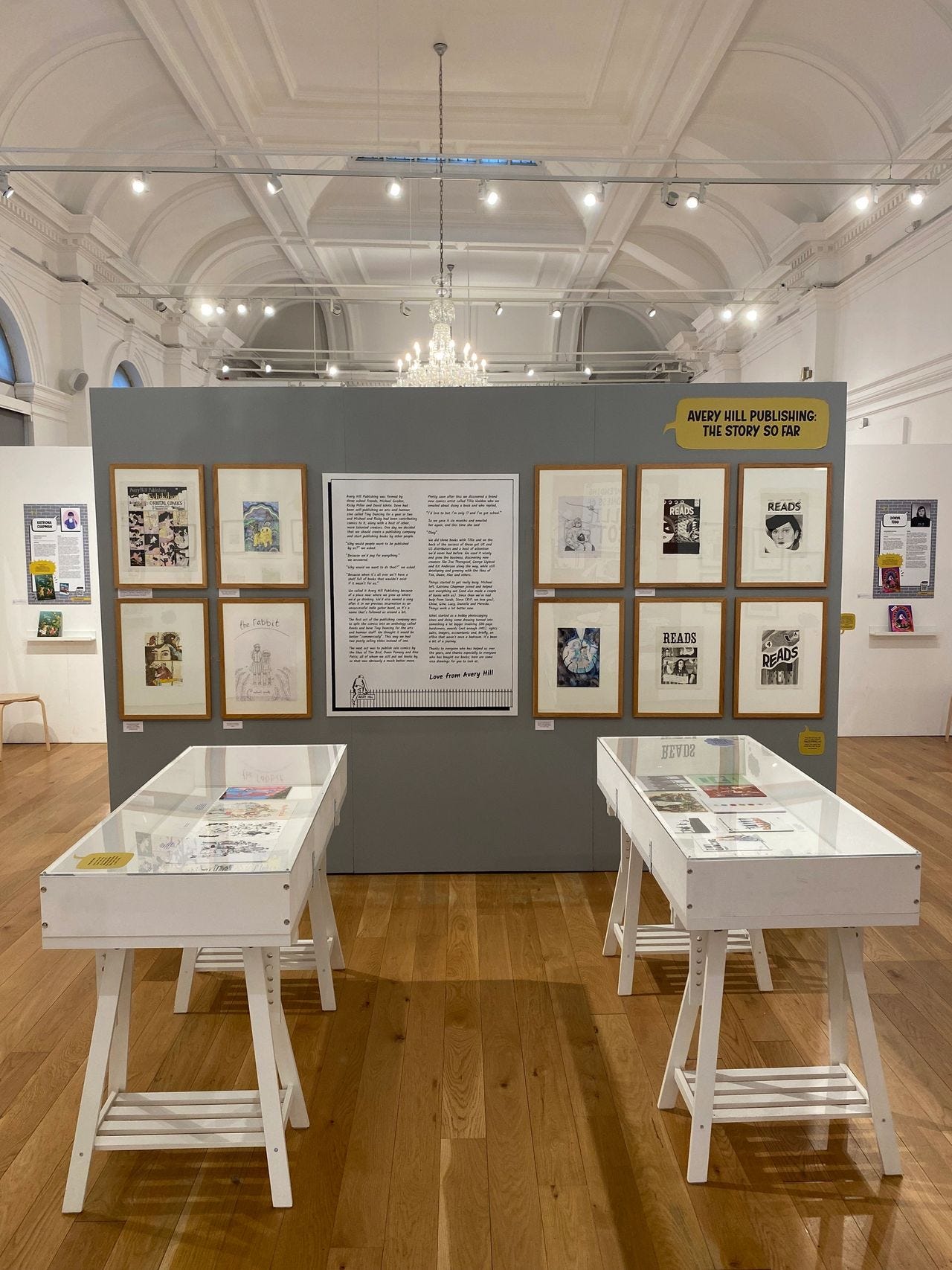
The exhibition begins with the story of the publisher itself. A dedicated section traces the origins of Avery Hill Publishing, the London-based independent press founded by Michael Gosden, Ricky Miller and David White. Their roots lie in the UK small press and zine scene—a DIY world driven by a simple motivation: to make the books they wanted to see exist.
Early on, they asked why anyone would choose to publish with them. Their answer was disarmingly direct: they would take the risk, fund the work, and bring it into the world.
That ethos paid off. Early collaborations with US artists such as Tillie Walden helped establish their reputation, while later successes, including Zoe Thorogood, have cemented their place as one of the UK’s most important independent comics publishers.
What Makes This Exhibition Unique
Comics exhibitions often fall into familiar patterns. Some are broad surveys, offering a thin slice across many artists, while others focus deeply on a single creator. This exhibition takes a different approach, presenting a coherent snapshot of contemporary comics through the lens of a single publisher.
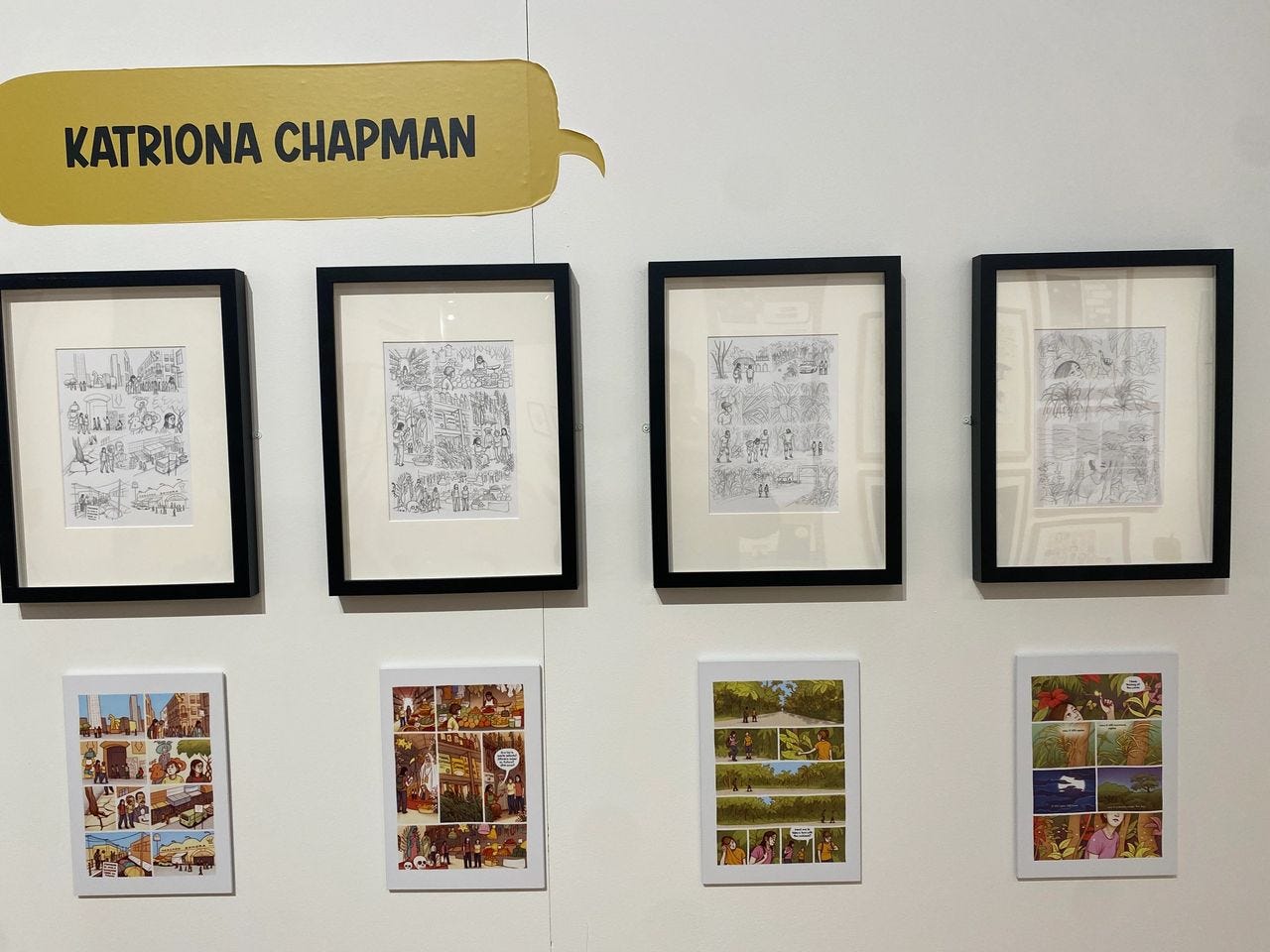
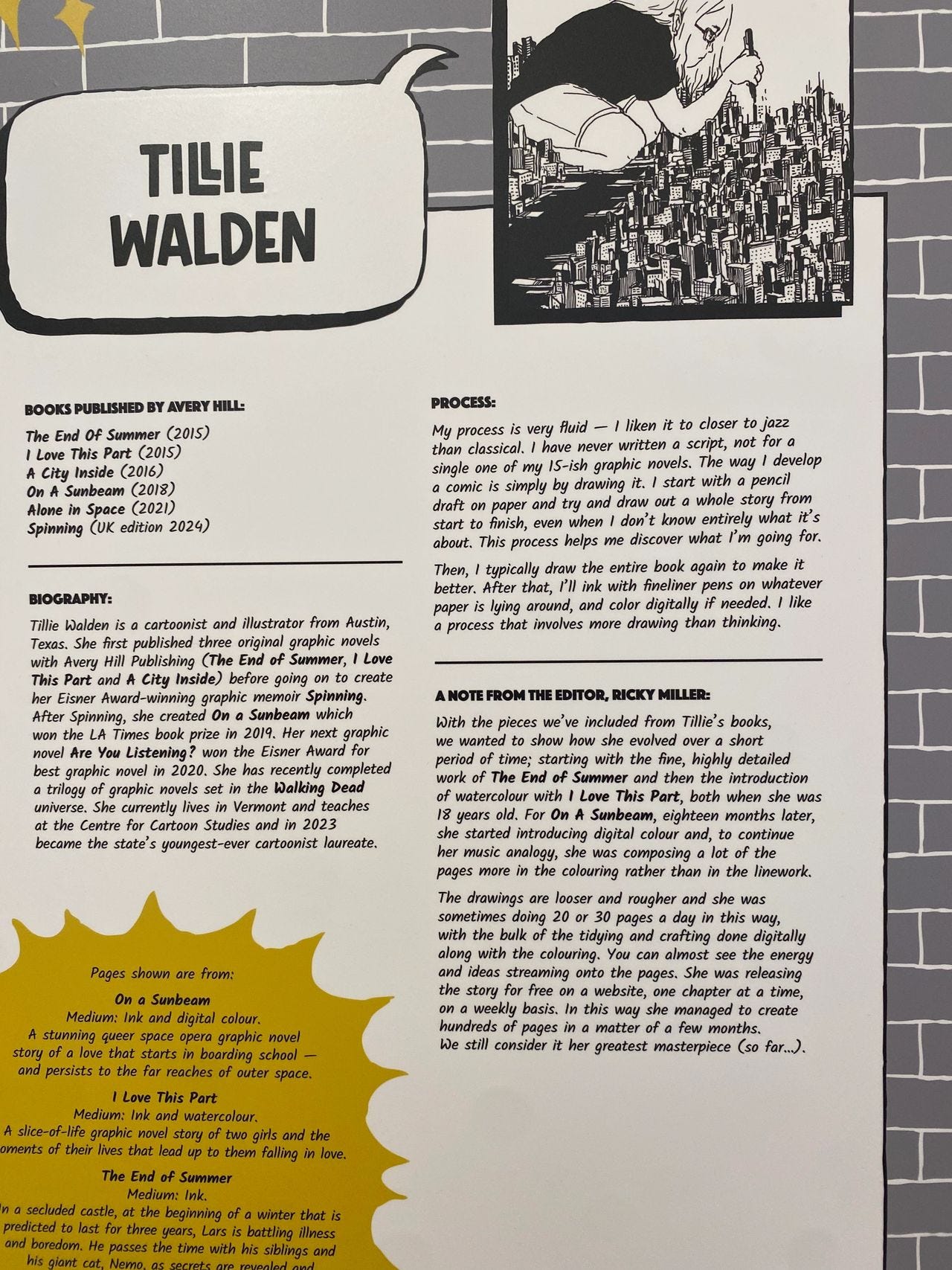
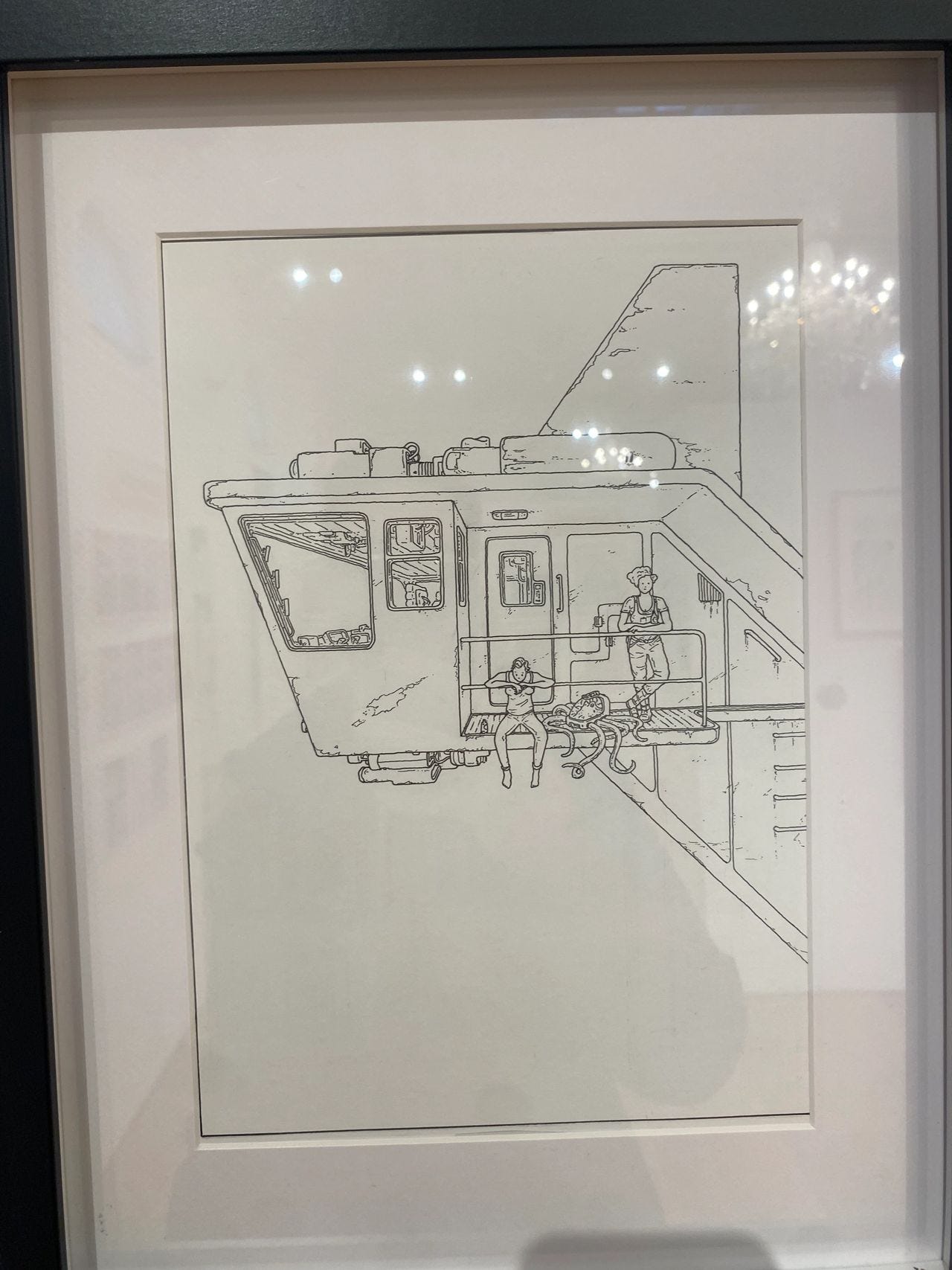
For each of the sixteen artists, there is a gentle introduction to their work, an interview about their process, and a carefully selected display of pages. At its core, the exhibition insists on showing how comics are made. Rather than presenting only finished pages, it opens up the creative process, allowing visitors to move from scripts to thumbnails, from rough layouts to inked or digital pages, and finally to completed artwork. You see not just the outcome, but the decisions behind it.
The contrast between artists is particularly revealing. Katriona Chapman begins with a structured script, carefully mapping out narrative before committing to drawing, while Tillie Walden works far more intuitively, developing stories through drawing itself and refining them later. These different approaches underline a shared reality: comics are built on sustained, often invisible labour—something the exhibition makes tangible throughout.
How to Make a Graphic Novel
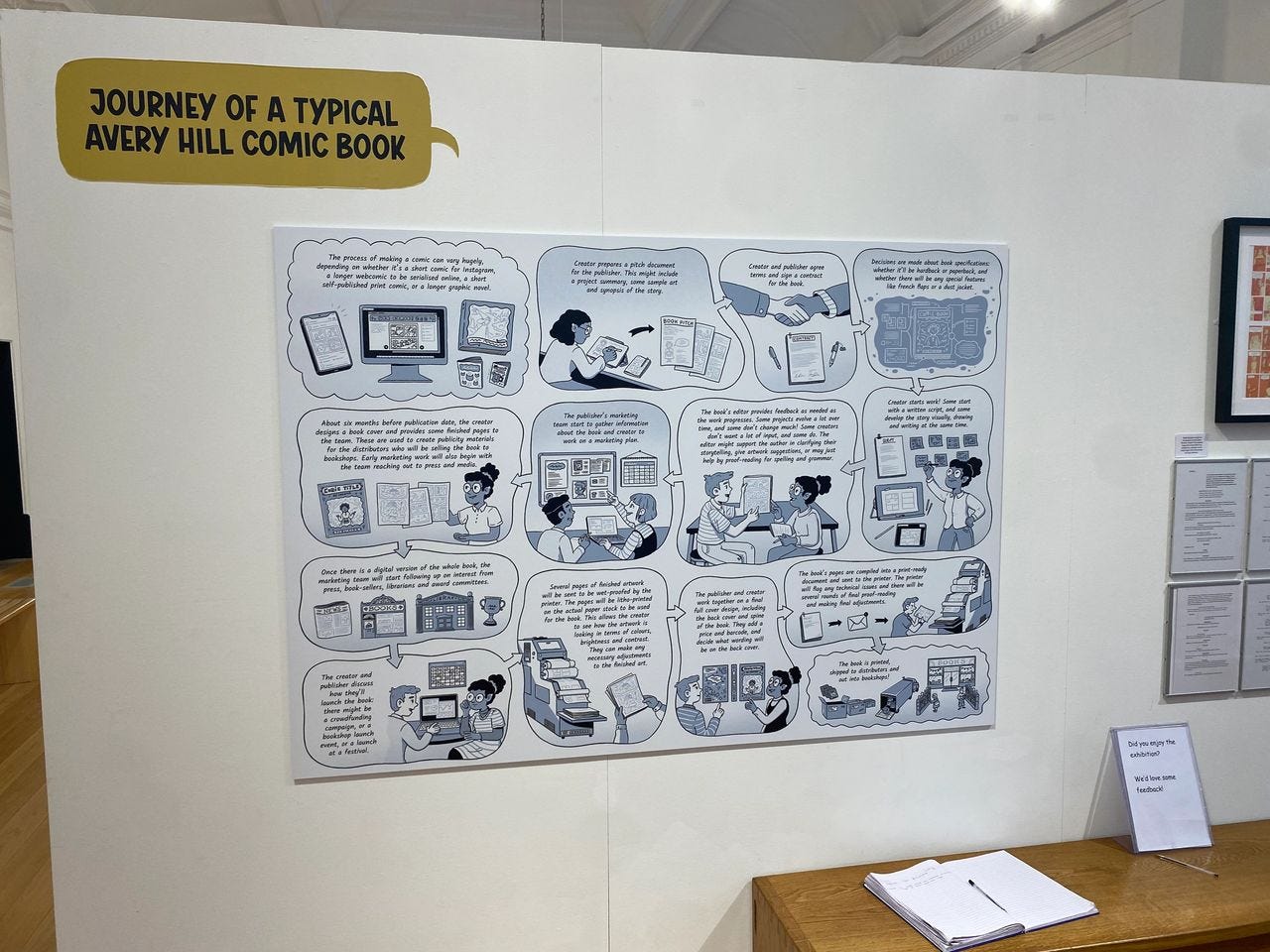
A central aim of the exhibition is to educate those less familiar with comics about how they are made. One particularly effective display traces the journey of a graphic novel from initial idea to finished book. Visitors are guided through each stage of development—from early concept and scripting, through visual planning, to final production. In doing so, the exhibition demystifies the medium, making visible a process that is often hidden from view.
Highlights from the Exhibition
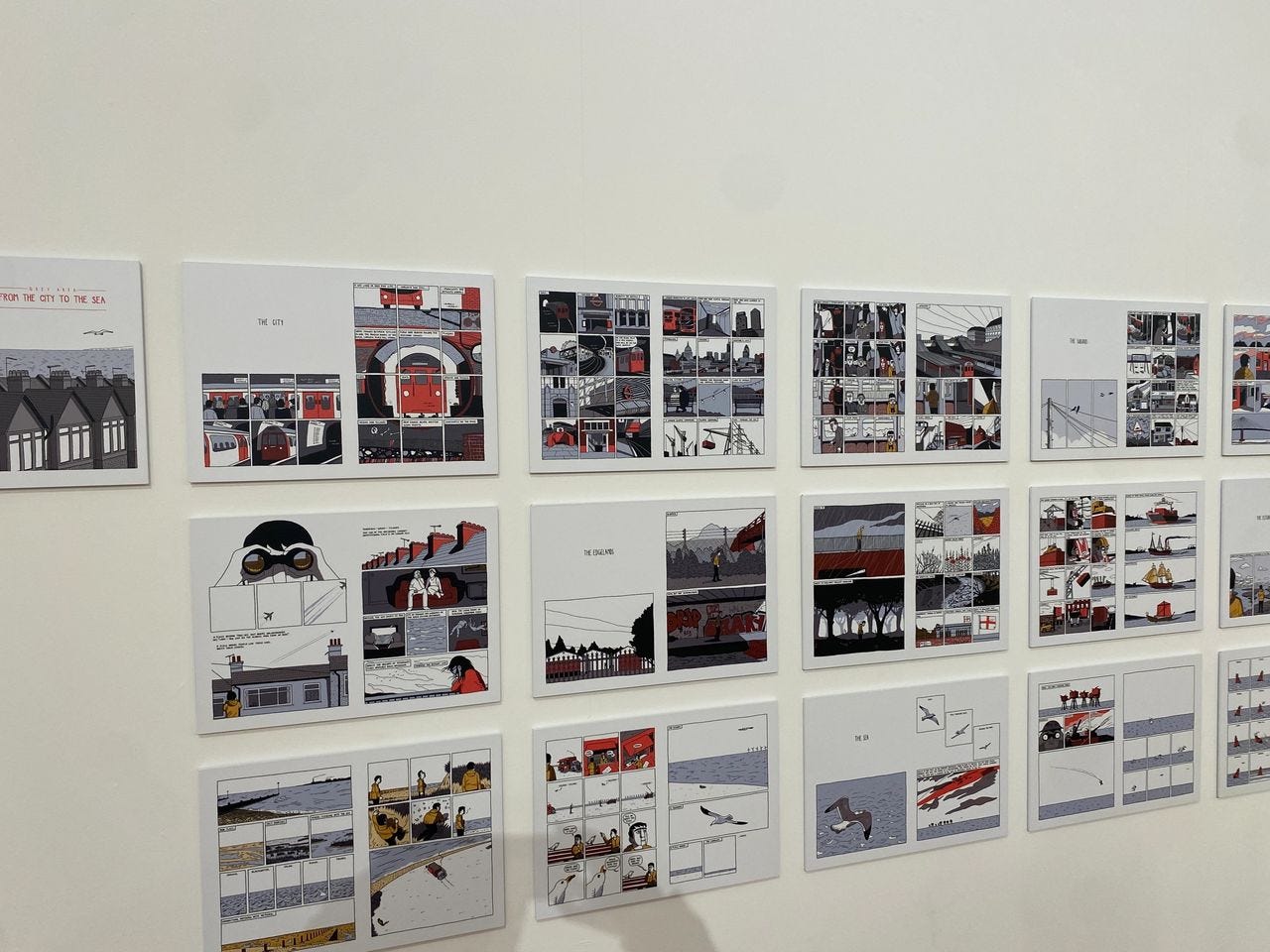
Several moments stand out across the exhibition. There is a memorable presentation of a book by Tim Bird, displayed in full across a gallery wall so that visitors can effectively read the narrative as they move through the space. It is an approach that does not work for every comic, but here it proves both engaging and memorable.
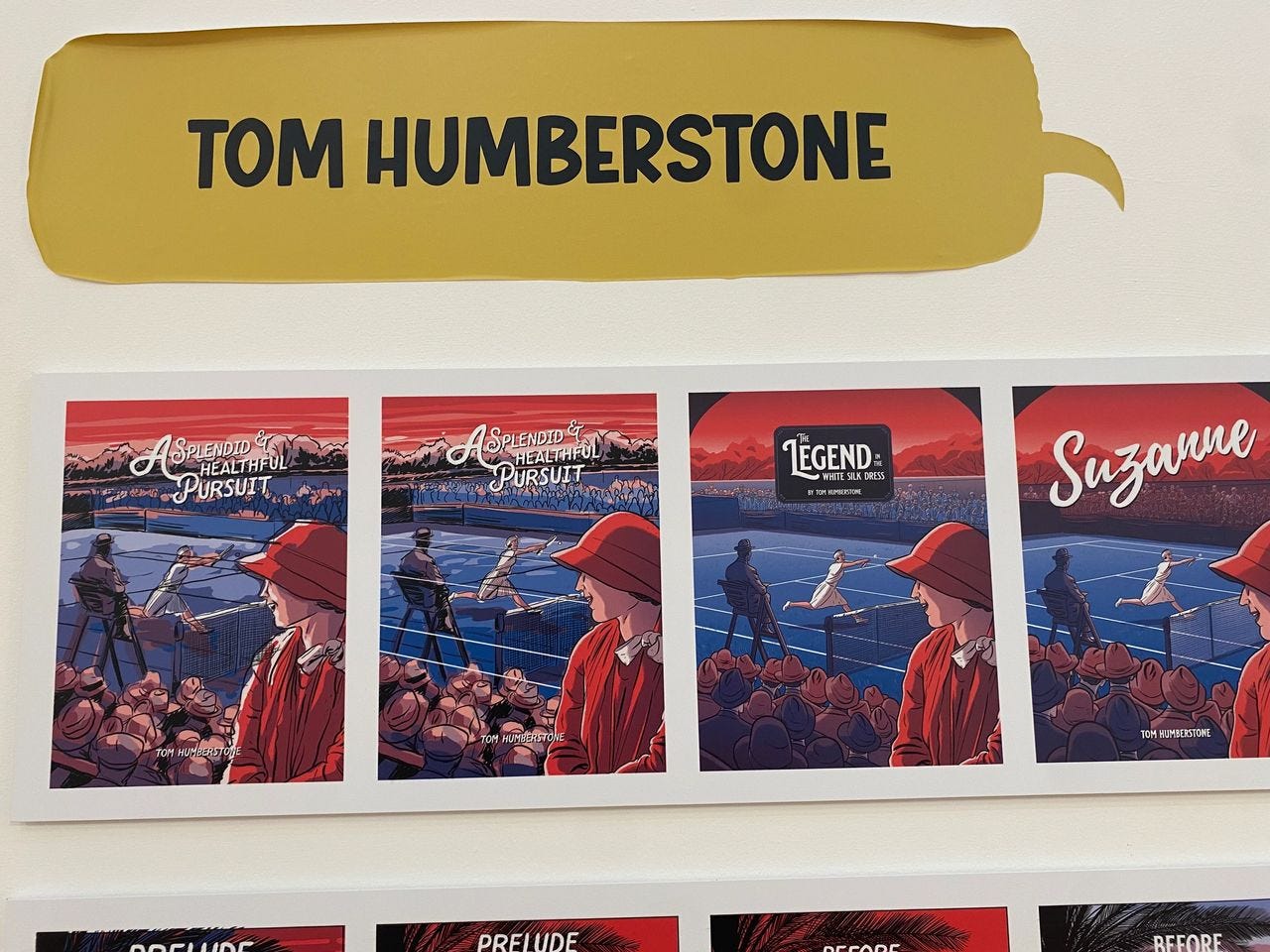
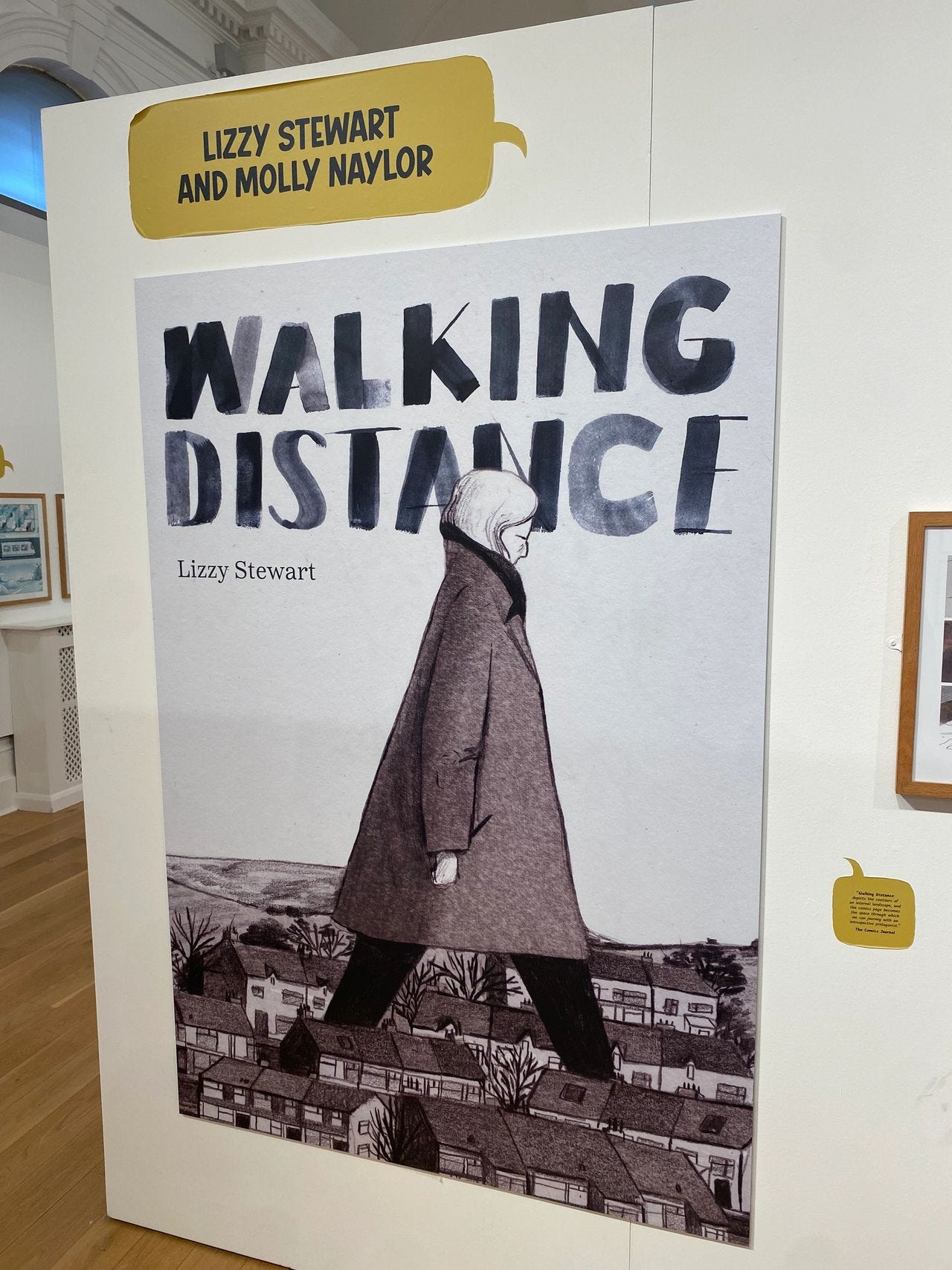
Elsewhere, Tom Humberstone’s work reveals the evolution of a cover through multiple iterations, offering insight into the refinement behind a single image. The range of styles is equally impressive. George Wylesol’s 2120 creates a disorienting, almost architectural reading experience as the reader navigates a vast, unsettling building reminiscent of the spatial experimentation of Richard McGuire. In contrast, I enjoyed learning about Lights, Planets, People, written by Molly Naylor and illustrated by Lizzy Stewart. Originally a stage play, its adaptation into a graphic novel highlights the flexibility of the form and its ability to absorb and reinterpret other modes of storytelling. I have subsequently purchased the book.
The Mercer and Its Audience
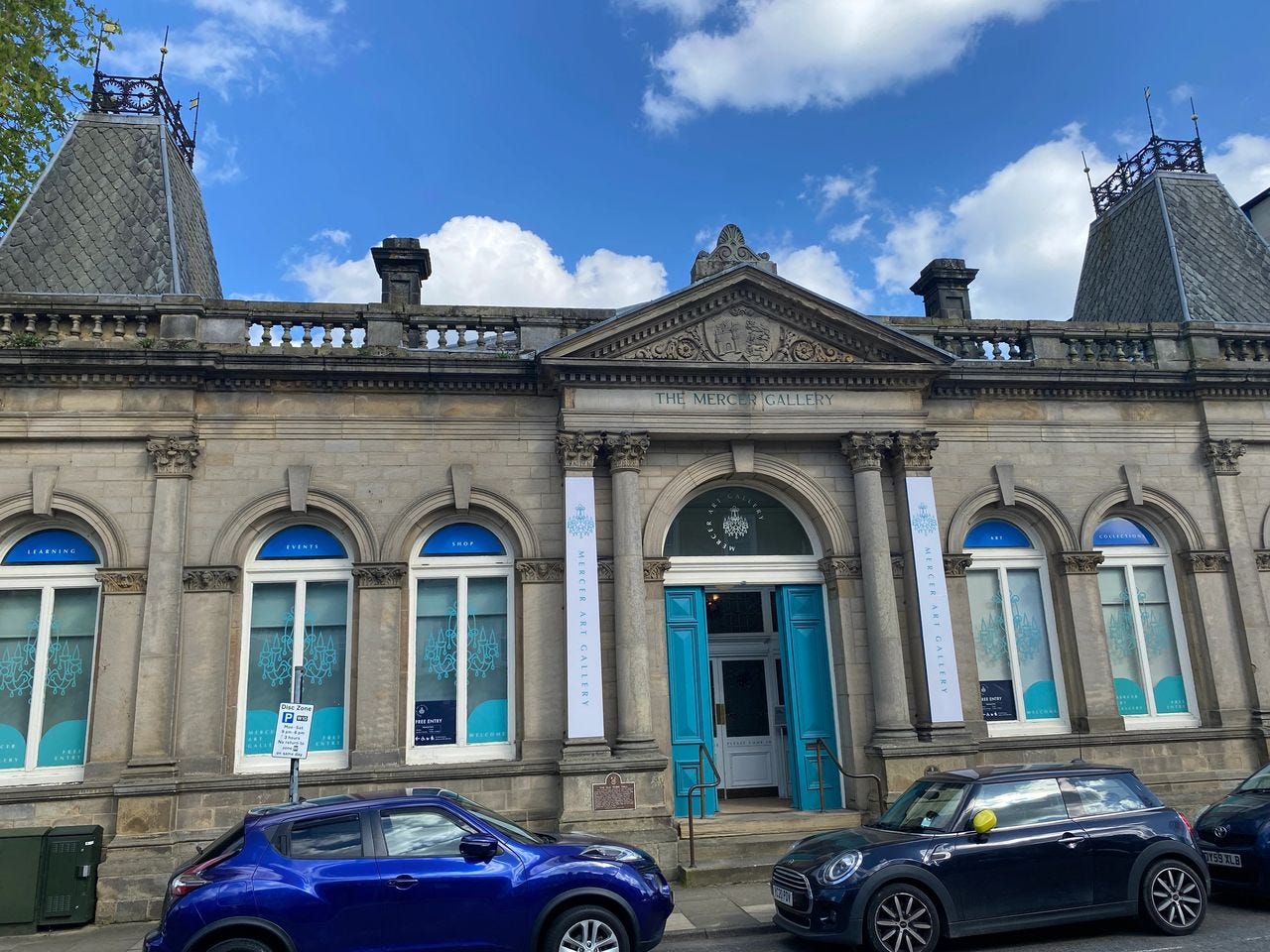
There is something quietly radical about hosting this exhibition at the Mercer Art Gallery.
A traditional gallery space, its regular audience might not typically encounter contemporary comics. And yet, according to one of the attendants, while some visitors were initially unsure, many stayed—and returned. Part of the reason for that is the variety on display; visitors found themselves drawn to certain artists or styles, even if others felt less familiar.
I spent around ninety minutes in the gallery. It wasn’t enough. This is an exhibition that rewards time and attention—one that invites you to look closely, to read, and to understand how these works come into being. I was told that, because the exhibition is free, people have been able to revisit it, spending more time with the work and engaging more deeply with a medium that may be new to them.
When I interviewed Katriona Chapman in February, she noted that the exhibition had already welcomed over 6,000 visitors. “It’s been really encouraging to see so many older readers engaging with long-form comics for the first time.” She hopes that this exposure will lead to a wider appreciation of graphic novels for adult readers across the UK.
More than anything, Vision and Labour demonstrates that comics are not just stories on a page, but the product of vision, effort, and craft—and that they deserve their place on the gallery wall.
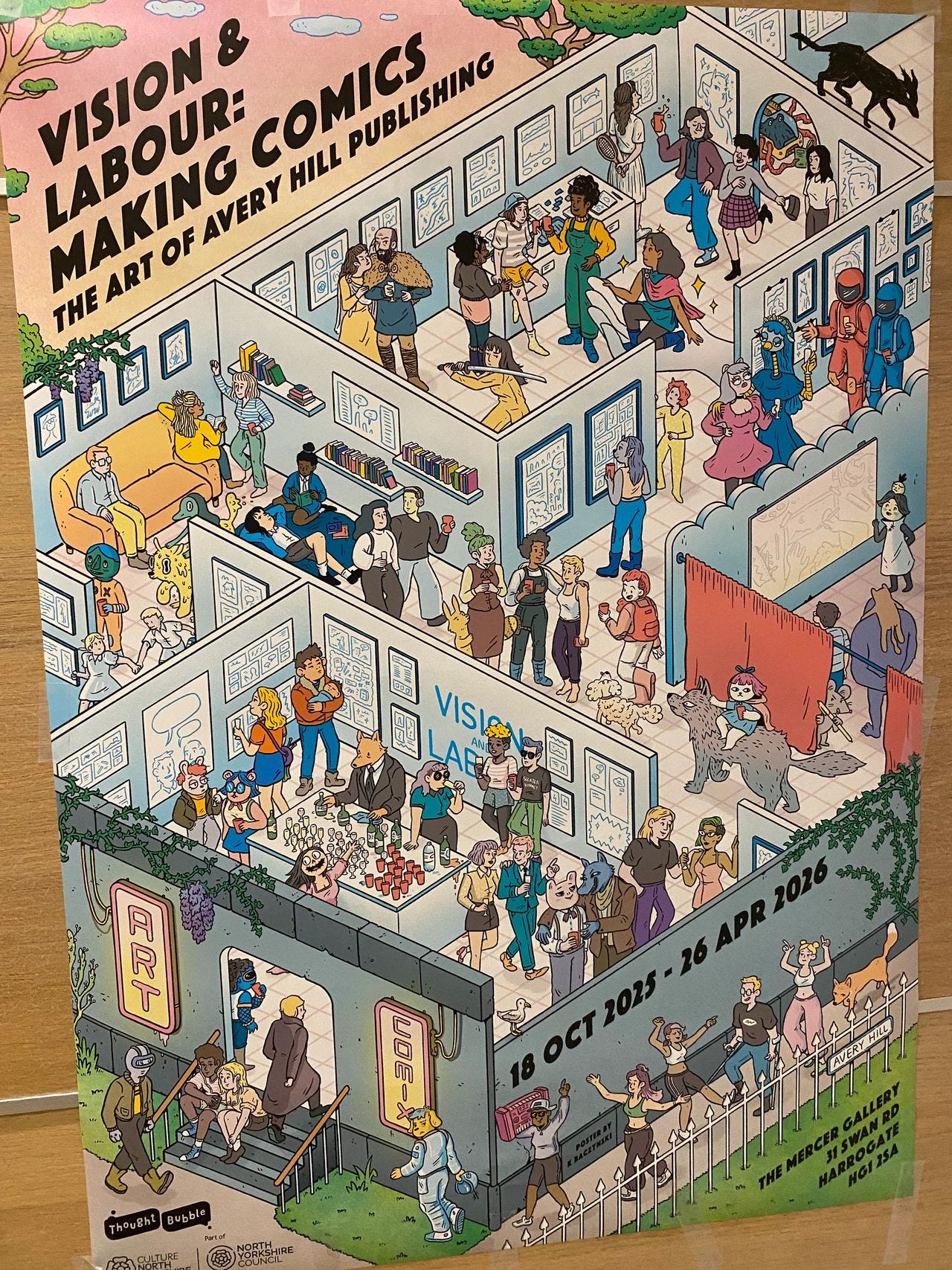
As I’ve said before, I always prefer it when an exhibition comes with a poster. As I left, I picked up the exhibition poster designed by Kristyna Baczynski—a fitting memento of a show that brings together artists, process, and publishing into a single, coherent experience.
Artists featured
Kristyna Baczynski, Tim Bird, Katriona Chapman, Tom Humberstone, Charlot Kristensen, B. Mure, Owen D. Pomery, Claire Scully, J. Webster Sharp, Rachel Smith, Lizzy Stewart, Lucy Sullivan, Zoe Thorogood, Donya Todd, Tillie Walden, George Wylesol.
Article written by Jonathan Sandler, author of the Graphic Novel, THE ENGLISH GI: WORLD WAR II GRAPHIC MEMOIR OF A YORKSHIRE SCHOOLBOY’S ADVENTURES IN THE UNITED STATES AND EUROPE , which was published in April 2022.
Very interesting, wish I could get up there and see it.
Wow!! Thank you for inviting us and taking us through this amazing comic art presentation!