
GraphicMEMOIRBlog | Creator Conversation #85
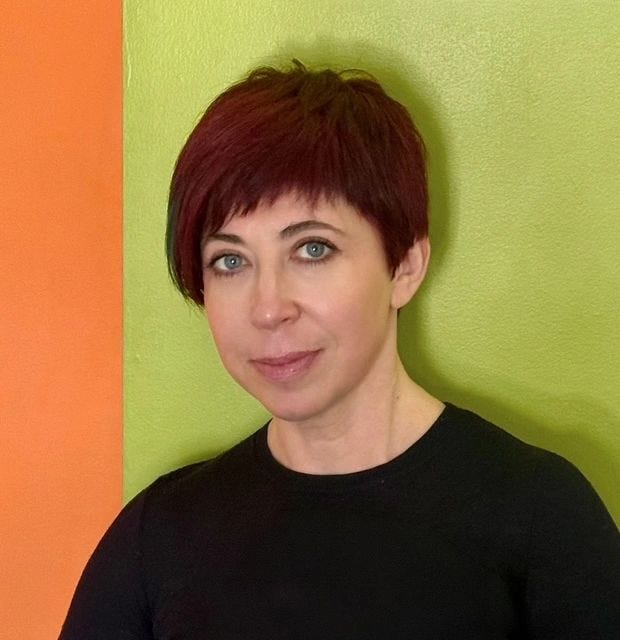
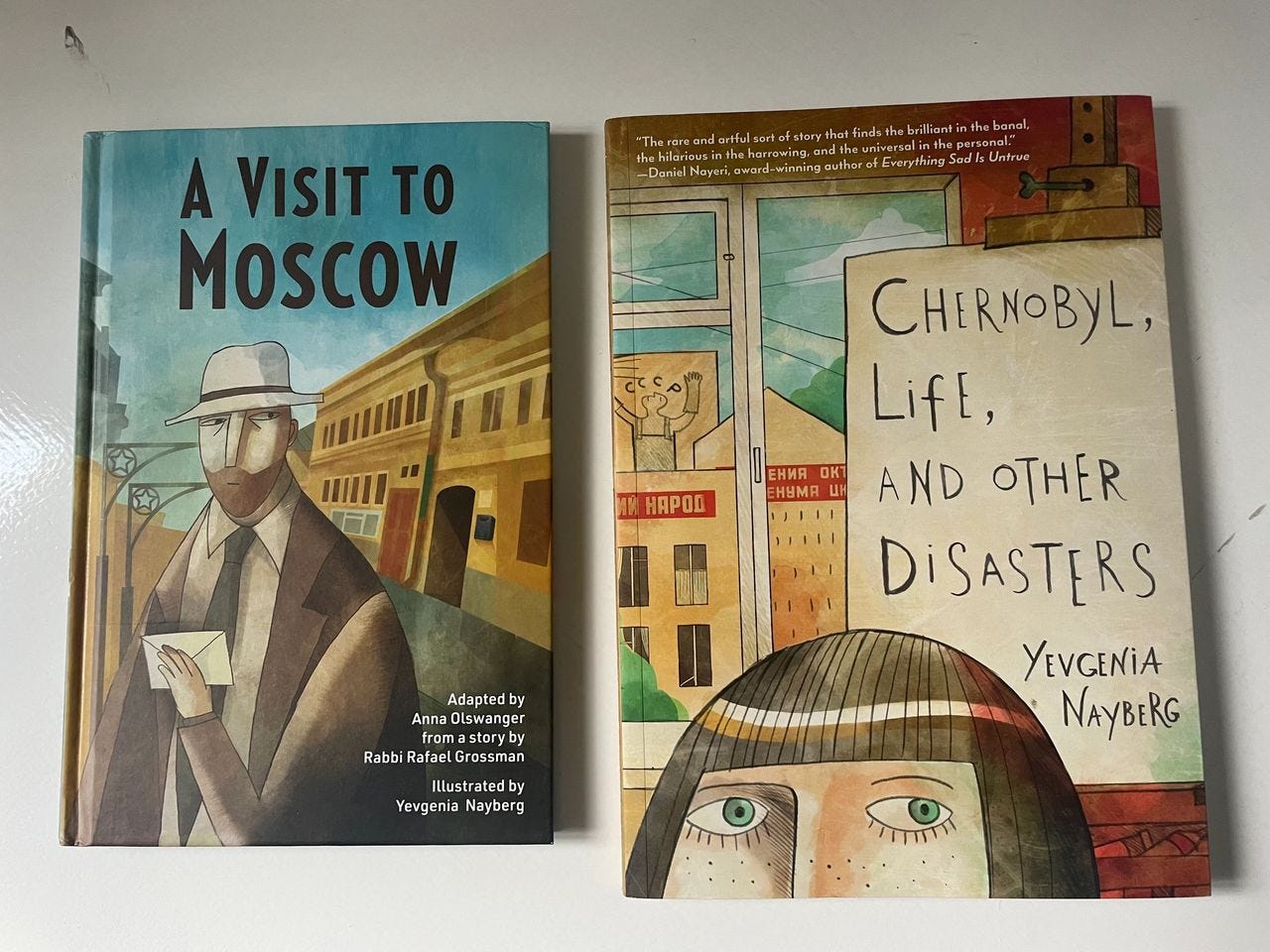
I first discovered the work of Yevgenia Nayberg, the Kyiv (formerly Kiev) born illustrator, through her collaboration with Anna Olswanger on A Visit to Moscow, where her illustrations captured the haunting tensions of Soviet life.
Now, Nayberg is both writer and artist with Chernobyl, Life, and Other Disasters: A Graphic Memoir, published in April by Neal Porter Books. Aimed at readers aged 10 and up, the book reaches far beyond that audience. While the Chernobyl disaster forms the backdrop, Nayberg is clear this is not a history book, but a deeply personal account of growing up in the fading Soviet Union beneath the shadow of an invisible catastrophe.
The result is an atmospheric memoir of Soviet life, displacement, and memory that feels as compelling for adults as younger readers. I caught up with Nayberg via Zoom from her home in Brooklyn to discuss her book and her transition from Ukraine to the United States.
From Illustrator to Author
When I interviewed Anna Olswanger on this blog, she told me of the trust she placed in Nayberg’s instincts while working on A Visit to Moscow. Olswanger provided the text and allowed Nayberg to construct the visual world freely, noting that she could “weave in elements of silence, mystery, and tension that might otherwise have gone unnoticed.”
In Chernobyl, Life, and Other Disasters, Nayberg turns that same sensitivity inward. The memoir begins not with history, but with a childhood memory: her braid. After five years of growth, her mother insisted it be cut following the Chernobyl disaster, fearing it might “hold” radiation.
“A friend said, ‘Maybe you should write a picture book about that,’” she recalls. “But it was a little too big for a picture book.”
That memory became the entry point into a larger story about childhood, catastrophe, identity, and migration.
Chernobyl: The “Invisible” Disaster
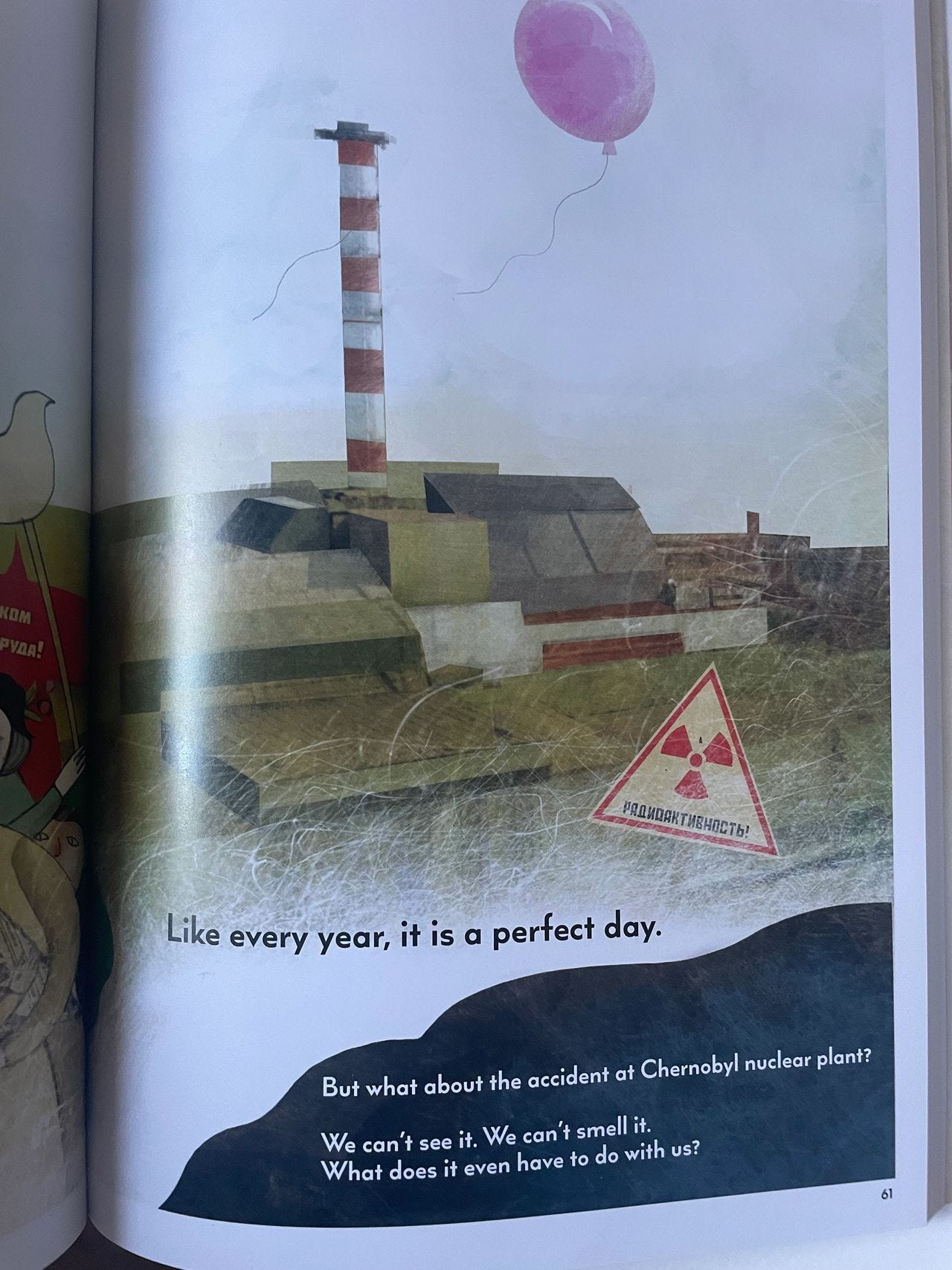
For Nayberg, writing about 1986 meant returning to the perspective of an 11-year-old living in Kyiv. While popular accounts of Chernobyl focus on explosions, evacuations, and political collapse, her experience was defined by something more unsettling: enforced normalcy.
“The whole point was that people were completely unaware,” she explains.
She remembers the May Day parade — a bright spring day where families celebrated in the streets while radioactive winds drifted toward the city. That contradiction anchors the memoir: ordinary life unfolding inside an invisible catastrophe, under a system quietly failing its citizens.
Rather than spectacle, Nayberg is interested in psychological aftermath: uncertainty, withheld information, and childhood lived under low-grade fear.
She also draws a comparison with the covid pandemic, not in scale but in psychology: both crises began with a vacuum of information, followed by rumour, speculation, and reliance on authority.
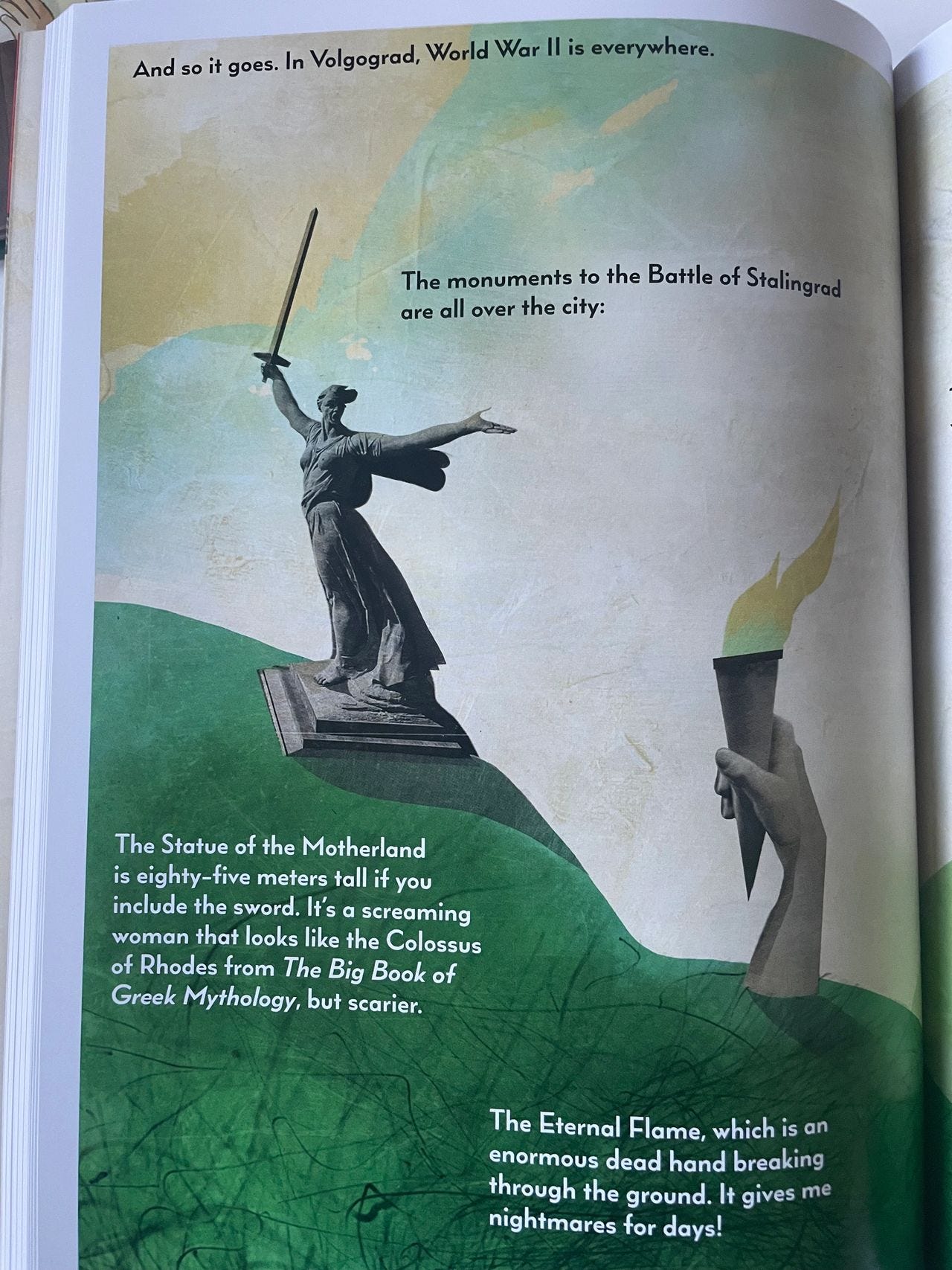
In the book, Nayberg and her mother travel to Volgograd, deep inside Russia. There, she observes a city still psychologically shaped by the Second World War — from monuments to the Battle of Stalingrad and eternal flames commemorating the unknown soldier, to what she poignantly describes as the “war survivors that never quite survived.”
The 1990s Migration: From Kyiv to Brooklyn
Nayberg belonged to the final wave of Jewish emigration from the collapsing Soviet Union. Arriving in Pittsburgh in the mid-1990s with her mother and stepfather, she describes the move as “pretty awful” and deeply disorientating.
She speaks candidly about what she calls the “immigrant’s burden”: the loss of linguistic precision, the erosion of confidence, and the expectation of permanent gratitude. Immigrants, she suggests, were expected to be “thrilled” — even while privately grappling with displacement and the work of rebuilding identity in a new language.
In Kyiv, she took pride in verbal precision. In Pittsburgh, she often felt “mute,” unable to translate thought into expression. That loss of language became, in her words, a loss of identity itself.
In the United States, that shift extended into her artistic education. She recalls struggling with the conceptual nature of American art training after arriving in Pittsburgh, having come from a system rooted in technical precision. The mismatch, she suggests, was less about ability than about fundamentally different ideas of what art should be.
Eventually she moved to Brooklyn, but the sense of dislocation remains central to the memoir — a geography of memory shifting between adolescence and adulthood.
Jewish Identity
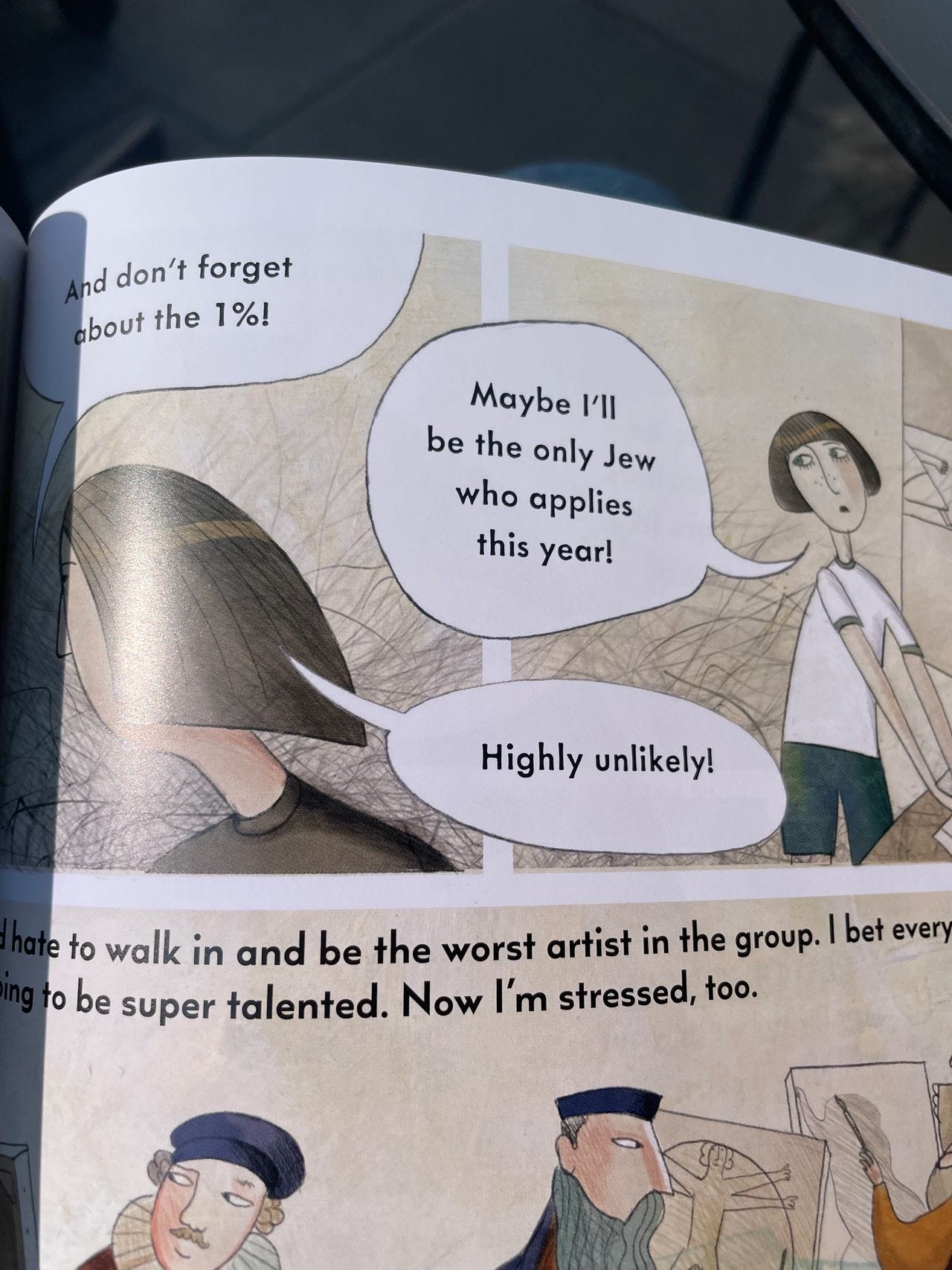
We also discussed the nuances of Soviet Jewish identity. Nayberg points out that in the United States, Jewishness is often defined by how religious someone is. This doesn’t always fit the experience of Soviet Jews, whose identity was secular and cultural rather than based on faith.
“There is no synagogue in the book,” she says, but she is clear that the Jewishness of her characters is simply a part of who they are. In the Soviet Union, being Jewish was an official ethnic category on your identity papers. This label was often used by the state to hold people back, such as through the unofficial quotas that limited Jewish enrollment in art schools. Her memoir reflects this reality—not as a religious story, but as a truthful account of life for a Jewish family in Kyiv.
Path to Publication
While working with Neal Porter Books on A Party for Florine, Nayberg developed a close relationship with editorial director Taylor Norman. When they met in New York, she asked if Norman would like to see the project she was developing.
Nayberg recalls that Norman was initially cautious about being pitched by an artist she did not yet know particularly well, but was enthusiastic enough to read the manuscript. By that stage, Nayberg had already completed the full script before any visuals were shared. After the project was acquired, the team spent around nine months refining it before she completed the artwork in an intense three-month period.
Digital Art
Despite its tactile feel, the memoir was created digitally under tight deadlines. The result is angular, expressive, and emotionally layered.
Nayberg is also careful not to exoticise her past. Dialogue is rendered in natural English rather than stylised broken speech, preserving emotional authenticity over linguistic “accent.”
Recreating a Lost World
Despite its tactile, hand-drawn feel, the memoir was created digitally during an intense three-month sprint. Nayberg admits she deliberately worked as though she were using traditional media in order to preserve the book’s emotional texture, even if she misses having physical original art to hold.
As she notes in her afterword, while the city is now Kyiv and the language is Ukrainian, she wanted to recreate the world exactly as she remembered it: a Russian-speaking Soviet landscape.
Although marketed to readers aged 10 and above, Nayberg resists narrow audience categories. The memoir reveals different layers depending on the reader’s age. She also notes that while the United States is the book’s primary market, it resonates differently in Europe, where Chernobyl remains more culturally immediate.
Final Thoughts
As the 40th anniversary of the Chernobyl disaster is marked, Yevgenia Nayberg offers an intimate account of the catastrophe as lived experience. By focusing on the world as she remembers it, without reshaping it through the knowledge of what came later, she preserves a landscape of lost braids, technical art school dreams, and invisible winds: the world that shaped the artist she would become.
Article written by Jonathan Sandler, author of the Graphic Novel, THE ENGLISH GI: WORLD WAR II GRAPHIC MEMOIR OF A YORKSHIRE SCHOOLBOY’S ADVENTURES IN THE UNITED STATES AND EUROPE , which was published in April 2022.
I was a 13 when it happened. Radioactive winds were blowing in over Scandinavia and we were warned not to eat produce or pick wild berries and mushrooms. Thank you for this post. I can’t keep up with all your wonderful graphic memoir suggestions!!! I want to read all of them.
Definitely want to read this one. On Amazon the summary in includes, "her classmates are terrified of American bomb strikes." When I was in Lithuania years ago, I had a talk with a couple of Lithuanian women and we were laughing (in an ironic way) about how while I was hiding under my desk and ducking in the hallways in school in fear of the Soviets bombing us, they were doing the same thing in Lithuania, fearing American bombs. Humanity is such a mess.